Author Archive

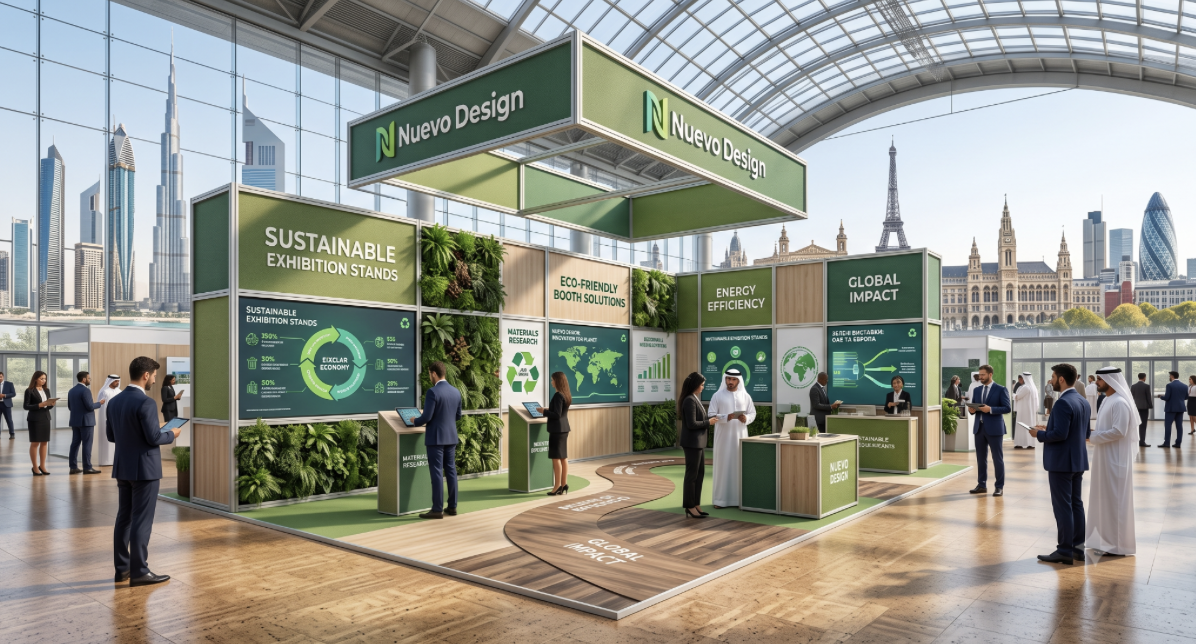
The exhibition and events landscape in the United Arab Emirates is undergoing a profound and necessary transformation. For decades, trade shows in Dubai and Abu Dhabi were characterized by opulence, massive custom-built structures, and unfortunately, significant post-event waste. Today, a new paradigm is taking over. Driven by global environmental concerns and forward-thinking government policies, the demand for sustainable exhibition stands has never been higher. Brands exhibiting in the UAE are now actively seeking an eco-friendly booth design in Dubai that not only captures the attention of their target audience but also significantly minimizes their ecological footprint. This comprehensive guide explores how your business can meet modern sustainability standards while maintaining a high-impact presence on the trade show floor.

The Driving Force: Aligning with the UAE Net Zero 2050 Initiative

To understand the rapid shift toward sustainable event practices in the Middle East, one must look at the broader strategic objectives of the United Arab Emirates. The government has launched the UAE Net Zero 2050 strategic initiative, a monumental nationwide campaign aimed at achieving net-zero greenhouse gas emissions by the year 2050.

How the Events Industry is Adapting to Green Mandates

This ambitious national goal directly impacts every economic sector, especially the booming exhibitions industry. Major venues like the Dubai World Trade Centre (DWTC) and Abu Dhabi National Exhibition Centre (ADNEC) are actively encouraging exhibitors to adopt greener practices, setting new benchmarks for waste management and energy conservation.

The Role of Corporate Social Responsibility (CSR)

For modern brands, participating in these events is no longer just about immediate lead generation and sales; it is equally about demonstrating robust Corporate Social Responsibility (CSR). A sustainable exhibition stand physically manifests a brand’s authentic commitment to the planet.

Building Trust Through Environmental Stewardship

Consumers, investors, and B2B partners increasingly prefer to do business with companies that actively share their environmental values. An eco-friendly approach instantly elevates your brand reputation and demonstrates strong leadership.

The Psychological Impact of Green Design

Psychologically, trade show attendees react highly positively to brands that visibly utilize natural textures, clear recycling efforts, and energy-conscious lighting. It builds subconscious trust and positions your company as a responsible, ethical industry pioneer.

Core Strategies for Eco-Friendly Booth Design in Dubai

Creating sustainable exhibition stands requires a strategic, holistic shift from the very beginning of the design process. It involves making deliberate, eco-conscious decisions regarding the sourcing of materials, architectural structure, and operational efficiency throughout the event.

Choosing Sustainable and Recycled Materials

The most significant environmental impact of any exhibition stand comes directly from the materials used to build it. Traditional single-use wood and virgin plastics are being rapidly replaced by innovative, green alternatives.

Utilizing Recycled and Upcycled Resources

Forward-thinking brands and stand builders are prioritizing materials that have already lived a previous life or can be easily and efficiently recycled after the trade show concludes.

The Advantages of Reclaimed Wood and Bamboo

Reclaimed wood offers a premium, rustic aesthetic without contributing to harmful deforestation. Alternatively, bamboo is an exceptionally strong, fast-growing grass that serves as a highly sustainable, versatile substitute for traditional timber framing and flooring applications.

Eco-Friendly Inks and Biodegradable Fabrics

For large-scale branding and graphics, it is absolutely crucial to use tension fabrics made from recycled PET bottles. These should be printed with water-based or soy-based eco-friendly inks that do not release harmful volatile organic compounds (VOCs) into the atmosphere.

The Efficiency of Modular Exhibition Structures

One of the absolute best, most practical ways to guarantee long-term sustainability is by utilizing modern modular exhibition structures instead of traditional, custom, single-use builds.

Why Reusability is the Ultimate Green Strategy

Modular systems are engineered with interchangeable, standardized components—typically utilizing lightweight aluminum frames. These sophisticated systems can be easily assembled, safely disassembled, and completely reconfigured to fit entirely different floor plans for future global shows.

Long-Term Cost Effectiveness and ROI

While the initial investment in high-quality modular exhibition structures might be comparable to a custom build, the long-term Return on Investment (ROI) is substantially higher. You effectively reuse the same core architecture across multiple events over several years, dramatically reducing both your carbon footprint and your marketing budget.

Reducing Transport and Logistical Emissions

Because modular parts are designed to pack down completely flat into custom flight cases, they require significantly less freight space. This logistical efficiency drastically reduces the number of delivery trucks needed, thereby lowering the carbon emissions associated with transporting your stand to and from the venue.

Advanced Eco-Friendly Solutions for Exhibition Stands

Beyond the physical architectural structure, achieving a truly eco-friendly booth design in Dubai requires carefully optimizing the operational and technical aspects of your exhibition presence.

Implementing Energy-Efficient Lighting and Technology

Exhibition halls are notoriously energy-intensive environments. As a responsible exhibitor, you can drastically cut down your localized power consumption through intelligent, smart technology choices.

LED Illumination and Smart Automated Sensors

Switching entirely to Light Emitting Diode (LED) fixtures is a non-negotiable step for building sustainable exhibition stands. LEDs consume up to 80% less energy than traditional halogen bulbs and emit far less heat, reducing the cooling burden on the venue’s air conditioning systems. Integrating smart motion sensors and automated timers ensures that heavy electrical displays and lighting rigs are powered down during non-operational hours, maximizing energy efficiency.

Waste Reduction and Comprehensive End-of-Life Planning

The true, ultimate test of a sustainable stand occurs during the dismantling phase. The traditional “rip and skip” culture of tearing down a stand and throwing it directly into a dumpster is entirely obsolete in today’s market.

Strategic Planning for Zero-Waste Deconstruction

A genuinely eco-friendly design anticipates the end of the event before construction even begins. Every single component must have a carefully designated path: it must be designed to be reused, returned to a vendor, recycled, or donated.

Renting Furniture and Equipment vs. Purchasing

Whenever practically possible, choose to rent your display furniture, audio-visual equipment, and flooring solutions. Rental companies naturally extend the lifecycle of these products across hundreds of distinct events, preventing the rapid accumulation of corporate waste.

Local Recycling and Charitable Donation Initiatives

Partner proactively with local UAE recycling facilities to handle any unavoidable material waste. Furthermore, many forward-thinking companies choose to donate living plants, floral arrangements, and perfectly usable display items to local Dubai charities or community centers once the trade show is officially over.

Partner with Nuevo Design for Your Sustainable Stand

Navigating the logistical complexities of eco-friendly booth design in Dubai requires a highly specialized partner who deeply understands both high-end structural aesthetics and rigorous local sustainability standards. At Nuevo Design, we are deeply committed to helping international brands align seamlessly with the UAE’s ambitious vision for a greener future.

As a premier Dubai-based exhibition stand company, we specialize entirely in conceptualizing, meticulously building, and flawlessly executing sustainable exhibition stands that make a powerful visual statement without leaving a heavy environmental footprint. From utilizing the latest cutting-edge modular exhibition structures to ethically sourcing recycled materials and proactively planning zero-waste deconstructions, our dedicated expert team handles every single detail of your sustainable trade show presence.

Let Nuevo Design transform your next corporate event into an unforgettable showcase of environmental responsibility, innovation, and brand excellence. By choosing us as your trusted partner, you ensure that your exhibition strategy perfectly reflects the modern values of sustainability and progress. Contact us today to thoroughly discuss how we can bring your specific eco-friendly vision to life and help you boldly stand out as a definitive leader in corporate sustainability on the global stage.


The landscape of global trade shows is undergoing a massive transformation, and nowhere is this evolution more evident than in the vibrant city of Dubai. As a premier global hub for international business, continuous innovation, and cutting-edge technology, the city routinely hosts some of the world’s most prestigious exhibitions, including the universally renowned GITEX Global. In such a highly competitive environment, relying solely on traditional booth architecture is no longer sufficient to capture the fleeting attention of industry leaders, key investors, and highly targeted potential clients.

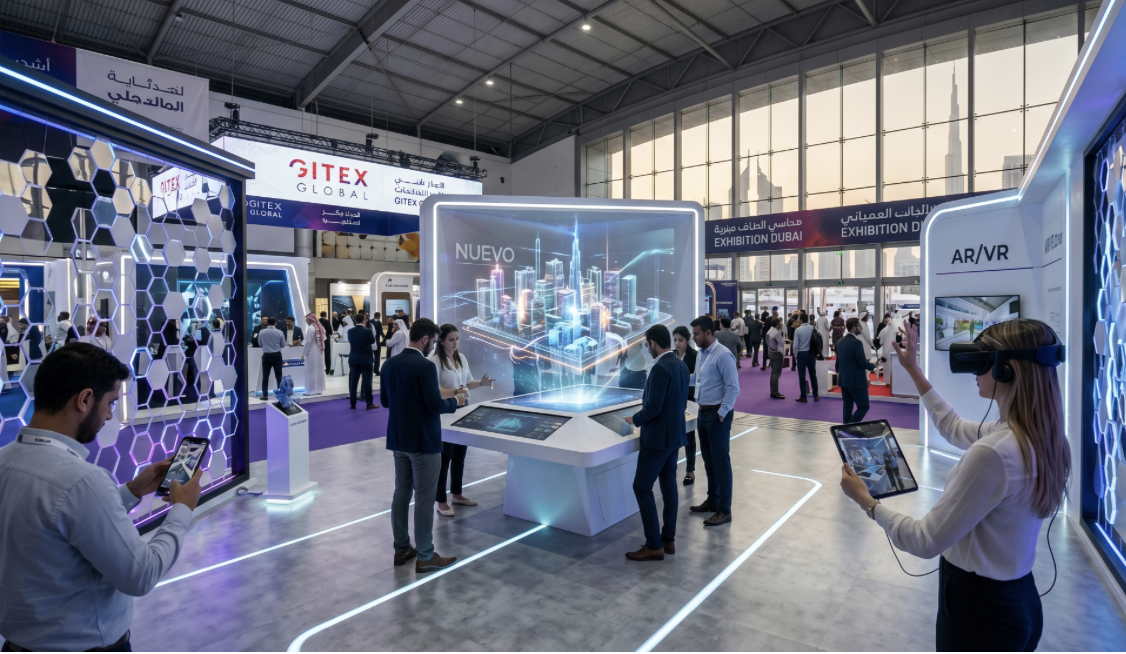
Enter the era of phygital event experiences-a revolutionary and highly effective approach that seamlessly blends physical architectural structures with cutting-edge digital innovations. By intelligently integrating Augmented Reality (AR), Virtual Reality (VR), kinetic displays, and advanced interactive elements, forward-thinking brands can transcend the physical limitations of their booth space to deliver unforgettable, deeply immersive narratives. For B2B companies aiming to make a lasting, highly profitable impact, mastering the art of innovative exhibition design is now the ultimate key to event success and superior lead generation.

Unpacking the “Phygital” Revolution in Event Marketing

The term “phygital” represents the strategic and seamless convergence of the physical and digital worlds. In the specialized context of exhibition stands, a phygital environment takes the tangible, tactile elements of a booth-the atmospheric lighting, the spatial architecture, the premium materials-and overlays them with dynamic, highly responsive digital interactions. This hybrid model allows visitors to experience complex products and intricate services in a captivating multi-sensory environment.

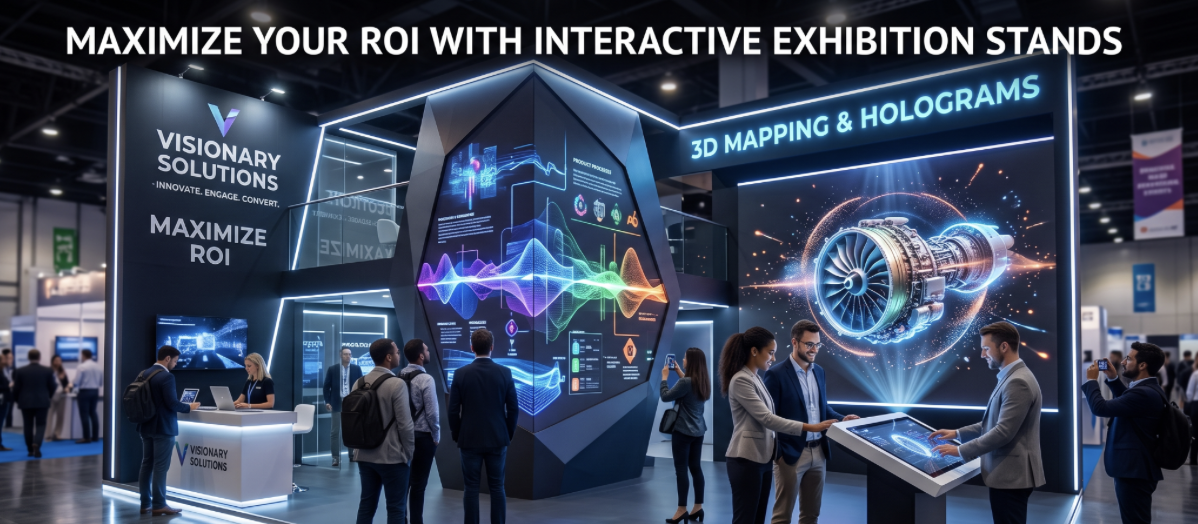
For B2B companies exhibiting in Dubai, the adoption of phygital strategies is not merely a technological novelty; it is a vital tool for driving deep audience engagement. When attendees step into a modern, technologically integrated booth, they are no longer passive observers merely collecting printed brochures or business cards. Instead, they become active participants within a brand’s curated ecosystem. Whether they are carefully manipulating a complex piece of heavy industrial machinery through intuitive 3D booth modeling directly on a touch-table, or exploring a futuristic smart city concept via a high-definition VR headset, the phygital approach ensures that the brand’s core message resonates on a profound, experiential level. This unprecedented level of active interaction drastically increases visitor dwell time, fostering superior lead qualification and facilitating much more meaningful face-to-face networking connections.

Key Technologies Driving Interactive Exhibition Stands in Dubai

Creating an engaging environment that consistently captivates a high-level B2B audience requires a sophisticated and well-planned technological toolkit. Let us explore the core digital elements that are currently defining the most successful and highly trafficked interactive exhibition stands Dubai has to offer.

Augmented Reality (AR) and Virtual Reality (VR) for B2B

The application of AR/VR for B2B marketing has moved far beyond the realm of casual gaming and consumer entertainment. In bustling exhibition spaces, Virtual Reality possesses the unique power to physically isolate the user from the noisy environment. A high-quality VR setup can instantly transport a potential client from a crowded expo hall in the Dubai World Trade Centre directly into a remote offshore oil rig, a highly secure advanced manufacturing facility, or a multi-million-dollar luxury real estate development that is still under construction. This total immersion entirely eliminates external distractions, allowing the prospect to fully focus on your specific value proposition.

Augmented Reality, conversely, deeply enriches the immediate physical surroundings of the booth itself. By simply scanning a physical podium, a specifically designed graphical marker, or even a blank wall with an iPad or smartphone, attendees can watch a static object dramatically spring to life. AR applications can overlay floating data points, animated 360-degree cross-sections, and real-time operational performance metrics over physical models. This makes AR an incredibly powerful tool for visually demystifying complex B2B products and abstract software services without taking up highly valuable floor space.

3D Holograms and Volumetric Displays

Few visual marketing tools possess the immediate, undeniable stopping power of a high-definition 3D hologram. Advanced holographic technology allows brands to vividly project life-sized, smoothly rotating models of their latest flagship products directly into the center of their exhibition stand, creating a breathtaking illusion that feels like science fiction brought to reality. This is particularly advantageous for the technology, healthcare, and advanced engineering sectors, where physically demonstrating the intricate internal workings of a product is essential but often logistically impossible. A bright, dynamic hologram instantly communicates a brand’s commitment to innovation and forward-thinking, making your booth a natural, highly photogenic focal point for passing event attendees and industry media personnel alike.

Kinetic Screens and Reactive Environments

Kinetic screens add an element of mesmerizing physical motion to traditional digital displays. Unlike standard, flat LED video walls, kinetic screens consist of hundreds of individually motorized panels that physically move in and out to create stunning, three-dimensional digital art and fluid waves of motion. When combined with advanced motion tracking sensors, these environments become highly reactive to the audience. As a VIP visitor walks past the stand, both the digital content on the screen and the physical formation of the panels can dramatically shift and intelligently respond to their movement. This unexpected element of surprise and delight serves as a powerful psychological trigger that heavily encourages busy attendees to stop, engage with the technology, and naturally initiate a conversation with your on-site sales and technical teams.

The “Phygital” Advantage: Maximizing Impact Without Overcrowding

One of the most significant logistical challenges international companies face when planning for massive, high-traffic events like GITEX or Arab Health is spatial management. Real estate on the premium exhibition floor is notoriously expensive, and overcrowding a limited stand area with heavy physical machinery, numerous physical product prototypes, and bulky wooden display units can easily create a claustrophobic, chaotic, and uninviting atmosphere that drives potential leads away.

This is exactly where seamless digital integration provides a massive strategic and financial advantage. By intelligently leveraging detailed 3D booth modeling and sleek interactive touchscreens, brands can proudly showcase an infinite digital catalog of their entire product line within a very minimalist, elegantly designed physical footprint. A sleek, open-concept exhibition stand that masterfully utilizes AR and VR allows highly valued visitors to move freely, breathe comfortably, and interact with the brand representatives in a relaxed setting. The physical architecture serves as a welcoming, high-end VIP lounge, while the invisible digital layer efficiently does all the heavy lifting of comprehensive product demonstration and client education. This minimalist yet highly functional approach is the absolute hallmark of modern, premium exhibition design.

Practical Ideas to Stand Out at Tech Expos like GITEX

If you are currently planning your company’s next major exhibition appearance in Dubai, integrating high-end technology must be done with clear strategic purpose. Here are highly actionable, proven strategies to ensure your technological investment translates into measurable B2B success and a strong ROI:

  • Gamify the Professional Experience: Introduce an element of friendly, professional competition. Develop a brand-relevant interactive VR challenge or an engaging AR scavenger hunt around your booth space. Offer exclusive, high-value industry reports, extended software trial licenses, or premium branded merchandise as rewards for high scores. Gamification significantly increases active participation and makes capturing lead data completely seamless and enjoyable.
  • Focus on the “Wow” Factor at the Perimeter: Strategically place your most visually striking technology-such as a large-scale kinetic screen matrix or a towering 3D hologram-at the very edge of your stand facing the busiest aisle. This acts as a powerful digital magnet, drawing high volumes of targeted traffic from the main walkways directly into your dedicated space.
  • Personalize the Attendee Journey: Utilize sophisticated RFID or NFC technology seamlessly integrated into attendee event badges to automatically trigger personalized welcome messages on your digital display screens. When a qualified prospect approaches an interactive station, the software should instantly adapt the content to match their specific industry sector or preferred language, demonstrating an incredibly high level of technological sophistication and dedicated client care.
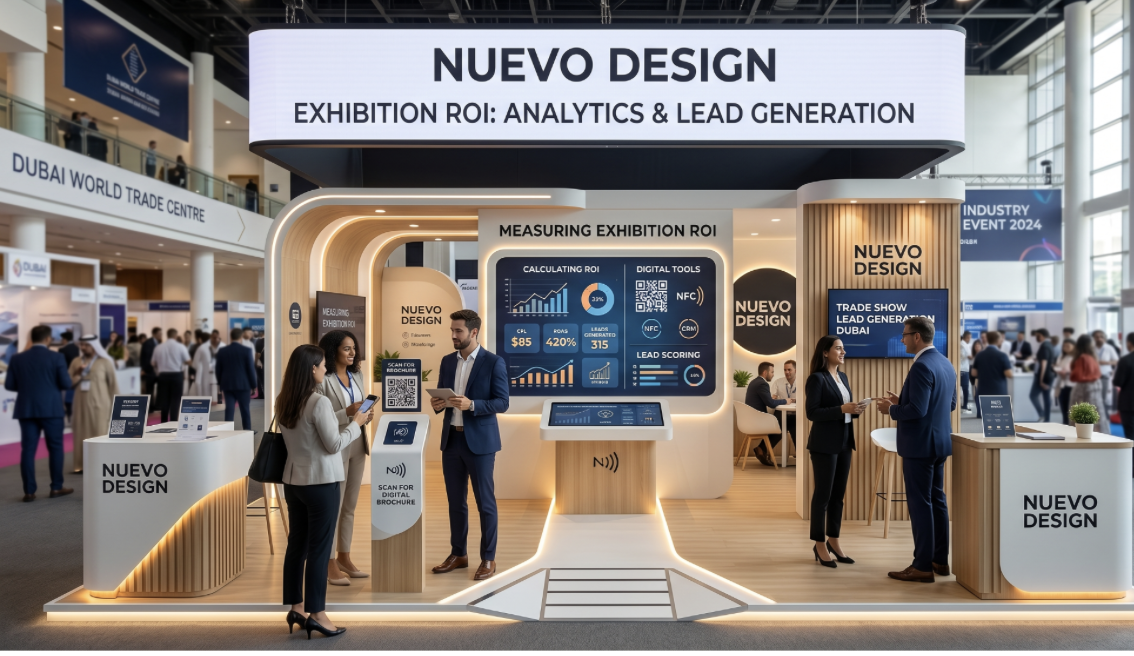
  • Integrate Real-Time Data Analytics: The true hidden beauty of digital interactions is that every single touchpoint can be meticulously tracked. Utilize smart backend dashboards to actively monitor which 3D models are being viewed the most, exactly how many minutes attendees are spending in specific VR environments, and which AR features are actively driving the highest engagement rates, allowing for real-time strategy adjustments during the multi-day event.

Why Nuevo Design is Your Partner for Innovative Exhibition Design

Successfully transitioning from a traditional, static display booth to a fully integrated, high-performing phygital environment requires a highly specialized blend of premium architectural expertise, advanced digital prowess, and a deep, practical understanding of human psychology in crowded event spaces. At Nuevo Design, we proudly specialize in bridging the complex gap between cutting-edge immersive technology and flawless, premium aesthetic execution.

As a leading and highly respected design agency based in Dubai, we intimately understand the unique cultural demands of the regional Middle Eastern market as well as the fierce, uncompromising competition present at massive global events. We do not just build temporary wooden structures; we architect comprehensive, highly profitable brand experiences. From the very initial conceptualization of your interactive exhibition stands Dubai presence to the seamless, flawless on-site integration of immersive phygital event experiences, our dedicated team ensures that every single digital touchpoint directly serves your overarching corporate business goals. Whether you are actively looking to integrate sophisticated AR/VR for B2B lead generation tactics or require meticulous, highly detailed 3D booth modeling to accurately visualize your future event presence before a single piece of material is cut, Nuevo Design is fully equipped and ready to elevate your brand far above the noise of the exhibition floor.

Conclusion

The undeniable future of elite corporate events in Dubai is unequivocally phygital. As the traditional boundaries between physical structures and digital experiences continue to blur at a rapid pace, the most financially successful brands will be those that fully embrace this dynamic hybrid reality. By intelligently and strategically integrating Augmented Reality, Virtual Reality, high-definition holograms, and deeply interactive displays, you can effectively transform your exhibition stand from a static, easily forgotten display into a dynamic, highly memorable engine for continuous engagement, technological innovation, and unparalleled, long-term B2B business growth.


Trade shows in the Middle East are bustling, high-energy environments. Venues are typically filled with massive digital screens, glowing neon lights, loud presentations, and miles of carpeted aisles. While technology and scale are impressive, they often lead to sensory overload and exhaustion for attendees. In such a highly competitive and artificial space, how can a brand truly stand out, capture attention, and keep visitors engaged? The answer lies in a concept that creates a striking contrast to the typical expo environment: Biophilic Design.

Bringing the outdoors inside, especially in the heart of a desert region like the UAE, creates an immediate psychological draw. A “living” exhibition stand acts as a natural oasis, offering attendees a much-needed mental break while simultaneously serving as a powerful, magnetic marketing tool.

What Exactly is Biophilic Design?

Biophilia, translated literally, means the love of life or living systems. In the context of architecture and spatial planning, biophilic design is the strategic integration of natural elements into built environments. It is not merely about placing a few potted plants in the corner of a room; it is a cohesive design philosophy that seeks to connect humans with nature.

When applied to trade shows, biophilic design transforms temporary architectural structures into immersive, natural experiences. This involves using live or preserved vegetation, natural textures like wood and stone, organic shapes, and even elements like flowing water or natural scents. The goal is to trigger the innate human affinity for nature, creating spaces that feel inherently welcoming, calming, and refreshing.

The “Oasis Effect” at UAE Trade Shows

In desert climates such as Dubai and Abu Dhabi, lush greenery, shade, and water have historically symbolized luxury, comfort, and sanctuary. Incorporating these elements into your booth design triggers what is known as the “Oasis Effect.”

When an attendee has been walking for hours under harsh artificial lighting, surrounded by metal, plastic, and screens, a booth that resembles a natural garden immediately catches the eye. It signals rest and relief. This contrast is a highly effective way to draw foot traffic. People are naturally drawn to environments that promise comfort, making your stand an irresistible focal point on the exhibition floor.

The Psychological Power of Greenery in B2B Environments

The benefits of a living exhibition stand extend far beyond simple aesthetics. Integrating nature into your booth design has profound psychological effects on your visitors, which directly impacts your commercial success at the event.

  • Stress Reduction: Trade shows are notoriously stressful. The noise, the crowds, and the pressure to network can overwhelm attendees. Studies consistently show that exposure to natural elements lowers heart rates and reduces cortisol levels. A biophilic booth puts your prospective clients at ease.
  • Increased Dwell Time: When visitors feel relaxed and comfortable, they stay longer. Increased dwell time means your sales team has a better opportunity to initiate meaningful conversations, demonstrate products, and build genuine relationships.
  • Enhanced Brand Perception: Brands that utilize biophilic design are subconsciously perceived as being more innovative, environmentally conscious, and empathetic to human needs. It elevates your corporate identity from a simple vendor to a forward-thinking industry leader.

“In an environment dominated by synthetic materials and digital noise, a touch of nature becomes the ultimate luxury. It commands attention without having to shout.”

Key Elements for Designing a Living Exhibition Stand

To successfully implement this strategy, you must look beyond basic floral arrangements. A true living stand integrates nature into its very architecture. Here are the core components you should consider.

1. Living Walls and Vertical Gardens

Space is often at a premium at trade shows. Vertical gardens, or “green walls,” are the perfect solution. They provide a massive visual impact without consuming valuable floor space. A floor-to-ceiling wall of vibrant, textured greenery serves as a stunning backdrop for your logo and an irresistible photo opportunity for attendees, naturally boosting your brand’s social media presence.

2. Natural Materials and Earthy Textures

Biophilic design is also about the materials you use for the physical structure of the booth. Move away from glossy plastics, heavy metals, and stark white laminates.

  • Use warm, reclaimed wood for counters and structural beams.
  • Incorporate stone, bamboo, or cork for flooring and accents.
  • Utilize natural, breathable fabrics like linen or cotton for seating and drapery.

3. Lighting That Mimics Nature

Standard exhibition hall lighting is notoriously harsh. To complement a biophilic stand, your lighting strategy must change. Use dynamic LED systems that mimic the natural progression of daylight. Incorporate warm, diffused lighting that filters through foliage, creating dappled shadows similar to a forest canopy. This significantly softens the ambiance of the space.

4. Organic Shapes and Fluid Architecture

Nature rarely features perfect right angles or rigid straight lines. To make your stand feel truly organic, incorporate curves and fluid shapes. Curved walls, circular meeting pods, and flowing counters mimic the natural forms found in landscapes, making the space feel more intuitive and inviting to navigate.

Sensory Additions: Sound and Scent

To complete the immersive experience, consider the invisible elements of design. The subtle, background sound of flowing water or gentle wind can mask the chaotic noise of the exhibition hall. Additionally, a very light, natural scent-such as cedar, citrus, or fresh pine—can leave a lasting, positive memory of your brand long after the event is over.

Overcoming Logistical Challenges in the Desert

Creating a living stand in a highly air-conditioned, indoor venue in the Middle East does come with logistical challenges. However, working with experienced exhibition stand builders in Dubai ensures that these hurdles are easily managed.

Managing Live Plants: Live plants require careful handling, specific lighting, and watering. In an exhibition setting, this can be complex. The solution often involves using highly realistic, premium preserved moss or high-quality artificial foliage for structural elements, combined with strategic placements of hardy, drought-resistant live plants (like succulents or sansevieria) where visitors can closely interact with them.

Sustainability and Zero Waste: A biophilic stand should not just look natural; it should actually be sustainable. The exhibition industry is moving towards greener practices. Designing a stand with modular, reusable wooden frames, renting plants from local nurseries, and using recyclable flooring aligns perfectly with modern ESG (Environmental, Social, and Governance) goals.

Strategic Integration for Maximum ROI

Integrating biophilic elements should not overshadow your primary business objectives; rather, it should enhance them. Every green wall, wooden texture, and water feature must be strategically placed to guide the visitor journey.

For instance, a lush vertical garden can act as a natural barrier to create a private, quiet meeting area in the center of the stand. Natural wooden displays can be designed to highlight your specific products, drawing the eye exactly where you want it. By combining breathtaking aesthetics with functional layout planning, you ensure that your booth is not just a beautiful garden, but a high-performing sales environment.

If you are looking to integrate these powerful, natural elements into your next event strategy, exploring custom stand design services is the first step toward transforming your vision into a reality. A customized approach ensures that your brand identity blends seamlessly with natural aesthetics.

Conclusion: Lead with Nature

As trade shows become increasingly saturated with digital technology, the brands that stand out will be those that offer a distinctly human, grounded experience. Biophilic design is more than a fleeting aesthetic trend; it is a fundamental shift toward creating healthier, more engaging, and ultimately more memorable brand spaces. By building a living exhibition stand in the heart of the desert, you provide a highly sought-after oasis that attendees will naturally gravitate toward, ensuring your brand remains the center of attention.

Ready to Build Your Oasis?

Don’t let your brand get lost in a sea of synthetic booths and digital noise. Elevate your presence at your next major trade show by bringing the power of nature to your floor space. Contact our expert design team today, and let us help you craft a living exhibition stand that captivates, inspires, and drives exceptional business results.


Entering the Middle East and North Africa (MENA) market requires more than just a solid business plan and a compelling product; it demands a profound understanding of cultural nuances. When participating in international trade shows and corporate exhibitions in business hubs like Dubai, Abu Dhabi, or Riyadh, your physical space speaks volumes before you even utter a single word. For MENA investors, trust is the absolute foundational currency of any successful business relationship.

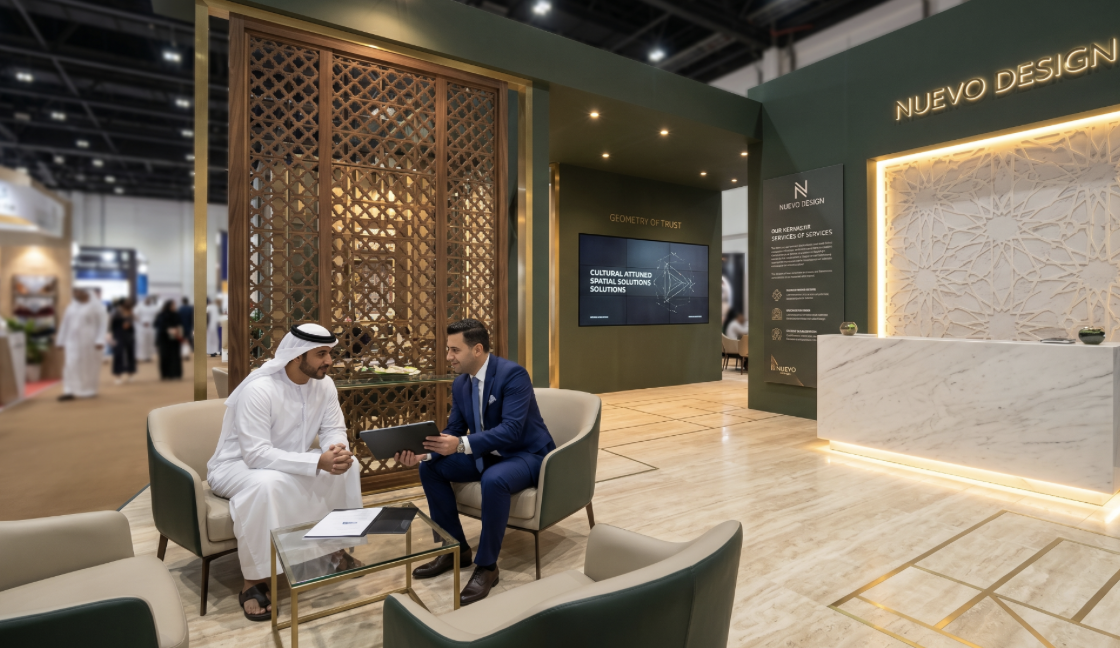
One of the most powerful, yet frequently overlooked, ways to establish this crucial trust is through the spatial environment you create. This article explores how the subtle integration of traditional architectural motifs in your exhibition stand design can significantly impact investor perception, creating a subconscious bridge of familiarity, profound respect, and ultimate trust.

Understanding the MENA Investor Mindset

Investors in the MENA region deeply value heritage, legacy, and cultural continuity. While they are highly forward-looking, driving futuristic smart cities, and heavily investing in next-generation technologies, they remain firmly rooted in their historical traditions. An exhibition space that completely ignores these cultural touchpoints might feel entirely alien, overly sterile, or purely transactional.

Conversely, a design that respectfully nods to local heritage signals that a company has done its homework. It shows a long-term commitment to the region that goes well beyond immediate financial gain. This is exactly where the concept of “The Geometry of Trust” comes into play. By utilizing specific spatial proportions, historical patterns, and architectural nods, international brands can evoke an immediate sense of reliability, hospitality, and mutual respect.

The Power of Traditional Architectural Motifs

To effectively attract MENA investors, it is essential to understand which architectural motifs resonate most deeply and what specific psychological triggers they activate in a business setting.

Mashrabiya: The Balance of Privacy and Transparency

The Mashrabiya is a traditional projecting oriel window enclosed with carved wood latticework. Historically, it allowed a cooling breeze to flow through a home while fiercely protecting the privacy of its inhabitants from the outside world.

In a modern business and exhibition context, the Mashrabiya motif can be subtly integrated into walls, VIP partitions, or meeting room dividers.

  • Psychological impact: It instantly communicates a profound respect for privacy—a highly valued and fiercely protected concept in Arab business culture. It allows investors to feel secure and discreet during high-level negotiations, while still maintaining a visual connection to the broader energy of the exhibition environment.

Arabesque and Geometric Patterns: Infinite Connectivity

Islamic art and architecture are globally renowned for their complex, interlacing geometric patterns. These designs are not merely decorative elements added for aesthetic appeal; they carry deep mathematical and philosophical meaning, often representing the infinite nature of the universe, cosmic order, and the interconnectedness of all things.

  • Psychological impact: When used subtly in premium floor designs, acoustic wall panels, or subtle digital displays, geometric arabesque conveys meticulous attention to detail, underlying stability, and an enduring, reliable structure. For an investor analyzing a potential venture, these are highly desirable traits in a future business partner.

The Sahn (Internal Courtyard): The Epicenter of Hospitality

Traditional Middle Eastern homes, palaces, and public buildings almost universally feature a central courtyard known as a Sahn. It is a vital place of gathering, natural cooling, and, most importantly, legendary hospitality.

  • Psychological impact: Designing an exhibition space around a central, welcoming hub closely mimics the Sahn. It immediately changes the dynamic of the interaction from an aggressive “sales pitch” to a “welcoming conversation.” Offering a comfortable, premium seating area right in the center of your stand demonstrates traditional hospitality, making regional investors feel valued as honored guests first, and business prospects second.

Subtlety is Key: Modern Interpretations for B2B Environments

The absolute most critical rule when utilizing traditional architectural motifs in the modern exhibition industry is subtlety. Overt, literal, or theme-park-style representations can easily backfire, appearing disingenuous, culturally insensitive, or simply outdated. The ultimate goal is seamless integration, not historical replication.

Modern Material Selection

Instead of using traditional heavy carved wood for a Mashrabiya pattern, consider executing the motif in sleek, modern, high-end materials. Laser-cut brushed aluminum, frosted architectural glass, or even 3D-printed sustainable polymers can effortlessly bring a traditional centuries-old pattern into the 21st century. This sophisticated blend of the old and the new perfectly mirrors the current economic landscape of rapidly advancing cities like Dubai.

Lighting as an Architectural Element

Lighting is a phenomenal, non-intrusive tool for subtle cultural integration. Instead of building physical partitions that take up valuable floor space, you can use advanced projection mapping or custom gobos to cast moving geometric shadows across a minimalist, pristine surface.

“Light does not just illuminate a physical space; it dictates its emotional temperature. In MENA-focused design, warm, patterned architectural lighting can instantly transform a sterile corporate booth into a trusted sanctuary for high-level deals.”

Practical Tips for Integrating Motifs in Exhibition Design

If you want to ensure your upcoming exhibition presence successfully attracts regional stakeholders and high-net-worth investors, carefully consider these practical, actionable guidelines:

  • Research Regional Variations: The MENA region is vast and absolutely not monolithic. Architectural motifs in the UAE differ slightly from those in Saudi Arabia, Qatar, or Morocco. Tailor your subtle design nods to the specific geographic location of your trade show.
  • Prioritize Flow Over Density: Traditional architecture in the region heavily emphasizes spaciousness, high ceilings, and unhindered airflow. Avoid cluttering your stand with too much product display or dense furniture. Allow the space—and your guests—to breathe.
  • Focus on Tactile Quality: High-end investors will subconsciously judge the overall quality of your business by the tactile quality of your presentation. Use premium, authentic finishes that feel substantial and good to the touch, such as real stone, heavy metals, and high-thread-count fabrics.
  • Integrate Technology Seamlessly: The MENA market loves cutting-edge tech. However, embed digital screens and interactive AR/VR elements within architectural structures rather than mounting them as clumsy afterthoughts.

You can observe real-world examples of how premium modern materials and thoughtful cultural layouts are successfully combined by exploring our successful design portfolio, which showcases culturally attuned, high-impact spatial solutions tailored for the Middle Eastern market.

Frequently Asked Questions (FAQ)

Does my business need to be originally from the Middle East to use these architectural motifs?

Absolutely not. In fact, when international companies from Europe, Asia, or the Americas respectfully integrate local motifs into their branding and physical presence, it often leaves a significantly stronger impression. It clearly demonstrates a high level of dedication, thorough research, and profound respect for the local market, bridging cultural gaps instantly.

Will subtle geometric motifs really make a tangible difference to a strict investor’s financial decision?

While investors ultimately make their final decisions based on hard data, ROI, and market viability, they initially choose who they want to sit down and do business with based on human relationships and baseline trust. An environment that subconsciously signals cultural respect and corporate stability can be the very deciding factor in whether a multi-million dollar conversation begins at all.

How can I ensure the cultural design doesn’t look outdated or cliché?

The secret lies in design abstraction. Take the core mathematical geometry of a traditional Arabesque pattern and scale it up massively, change its traditional material to something futuristic, or use it asymmetrically. Modern, stark minimalism paired with just a single, strong cultural motif is a highly effective, premium strategy used by top luxury brands in the region.

Build Trust with Expert Design

Succeeding in the highly competitive MENA market requires a deeply nuanced approach where every single detail of your brand’s physical presence is meticulously optimized for cultural resonance and professional credibility. “The Geometry of Trust” is far more than just a passing design philosophy; it is a highly strategic business tool designed to accelerate relationship building and secure investments.

Don’t leave your vital first impression to chance. If you are preparing for an upcoming trade show, major expo, or corporate exhibition in the UAE or the wider region, partner with seasoned experts who deeply understand the delicate balance of modern global innovation and traditional regional respect. Subscribe to our design newsletter for continuous insights into Middle Eastern market trends, or contact our design experts today to start planning an exhibition space that truly speaks the language of MENA investors.

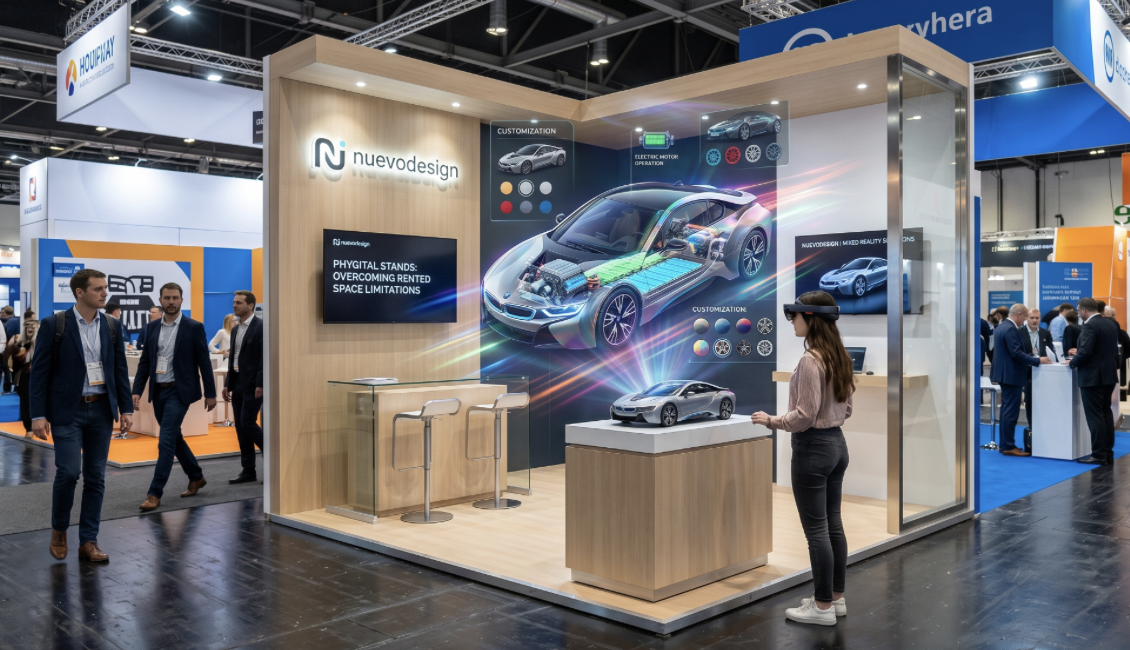
Securing floor space at major global exhibitions is an expensive endeavor. For many businesses, renting a massive booth to display an entire catalog of products simply is not feasible. However, the size of your rented space no longer dictates the impact of your brand presence. Enter the era of phygital stands-a revolutionary approach that merges the physical and digital worlds using Mixed Reality (MR).

By integrating virtual elements into physical booths, companies can overcome strict spatial limitations, offering visitors an expansive, immersive experience without the premium price tag of a large footprint.

The Challenge of Confined Trade Show Booths

Every square meter at a trade show is a heavily calculated investment. Traditional exhibition strategies often force businesses into difficult compromises when dealing with smaller booths. You might have to choose between displaying your flagship product or setting up a comfortable meeting area for client negotiations.

Furthermore, logistics present a massive hurdle. Shipping heavy machinery, large-scale architectural models, or a complete line of consumer goods to an international venue requires enormous transportation, storage, and assembly budgets. When the physical space is limited to a 3×3 or 3×6 meter block, traditional innovative exhibition designs often hit a wall. Overcrowded booths overwhelm visitors, leading to a poor user experience and lost lead generation opportunities.

What Exactly is a Phygital Stand?

The term “phygital” is the strategic intersection of “physical” and “digital.” A phygital stand is an exhibition space designed to bridge tactile, real-world interactions with dynamic digital enhancements.

While the physical stand provides the essential foundation-branding, meeting spaces, and physical touchpoints-the digital layer provides infinite depth. This digital layer is typically powered by Mixed Reality (MR), which encompasses both Augmented Reality (AR) and Virtual Reality (VR).

“The true power of a phygital stand lies in its ability to bend the rules of physics, turning a modest physical footprint into an infinite digital showroom.”

How Mixed Reality Solves Space Limitations

Mixed reality acts as a portal, instantly expanding the boundaries of your rented space. Here is how adopting a phygital approach directly solves the problem of spatial constraints.

1. The Infinite Virtual Showroom

With AR glasses or even simple tablet devices, a physical pedestal can become a launchpad for your entire inventory. Instead of bringing ten different variations of a machine or vehicle to the show, you bring one physical scale model. Through Mixed Reality, attendees can digitally cycle through every color, size, and configuration option right before their eyes. The space required remains minimal, but the visual offering is limitless.

2. X-Ray Vision and Internal Mechanics

If you sell complex technical equipment, explaining how it works on a crowded floor is difficult. Mixed reality allows users to look “inside” your products. By scanning a physical marker on your stand, attendees can watch a 3D holographic animation of the internal mechanics functioning in real-time. This interactive demonstration requires zero extra floor space but delivers a massive educational impact.

3. Immersive VR Environments

Virtual Reality completely replaces the physical world with a digital one. By allocating just one or two square meters for a VR swivel chair, you can transport your prospect out of the busy exhibition hall and directly into your manufacturing plant, a luxury real estate property, or a simulated offshore oil rig.

4. Engaging Gamification

Gamification drives foot traffic, but physical games take up valuable room. Mixed reality allows you to host interactive digital scavenger hunts or product-assembly challenges directly over your physical booth. This keeps visitors engaged longer, dramatically increasing your chances of capturing their data.

Practical Steps for Building a Phygital Presence

Transitioning from a traditional booth to a phygital space requires careful planning. Here are actionable tips to ensure your mixed reality integration is successful and space-efficient.

Prioritize Strong Physical Anchors

Mixed reality experiences still need a physical starting point. Design sleek, minimalistic physical counters or totems that serve as triggering points for AR content. Ensure your branding is bold and acts as a clear invitation for interaction. If you want to see how physical foundations support digital ambitions, explore our past successful projects to understand structural layout techniques.

Choose the Right Hardware

  • Tablets and iPads: Highly accessible and user-friendly for simple AR demonstrations. They require minimal space to store and charge.
  • AR Glasses (e.g., Microsoft HoloLens): Offer a hands-free, deeply immersive experience, allowing users to see holograms overlaid on your physical booth.
  • VR Headsets (e.g., Meta Quest): Perfect for fully transporting users, but ensure you designate a safe, clear physical boundary (at least 1.5×1.5 meters) so blindfolded users do not bump into physical structures.

Ensure Flawless Internet Connectivity

Phygital stands die without data. Never rely on the free venue Wi-Fi. Always invest in a dedicated, high-speed, private network for your booth to ensure heavy 3D assets load instantaneously without buffering.

Focus on Lighting and Tracking

Augmented reality relies on cameras recognizing physical spaces. Ensure your exhibition stand has bright, even lighting. Avoid heavily reflective surfaces or stark black walls, as these can confuse AR tracking sensors, causing your digital models to glitch or float unnaturally.

Frequently Asked Questions (FAQ)

Q: Do I need a massive budget to create a phygital stand? A: Not necessarily. While custom VR applications can be expensive, basic AR integrations utilizing tablets and QR codes are highly cost-effective. The money saved on shipping massive physical products often offsets the cost of software development.

Q: Will older demographics engage with Mixed Reality at trade shows? A: Yes, provided the user interface is intuitive. The key is to have trained booth staff ready to guide attendees through the experience, handling the technical aspects so the visitor can simply enjoy the presentation.

Q: Does a phygital stand mean I do not need a good physical design? A: Absolutely not. The physical stand is what attracts attendees in the first place. High-quality materials, professional lighting, and welcoming architecture are essential. The digital elements enhance the physical space; they do not replace the need for physical quality.

Ready to Transform Your Exhibition Strategy?

In the modern trade show environment, the businesses that stand out are not always the ones with the largest budgets for floor space; they are the ones who utilize their space the smartest. By embracing phygital concepts and mixed reality, you can deliver unforgettable, interactive experiences that leave a lasting impression on your potential clients, regardless of your booth’s physical dimensions.

Do not let square footage limit your brand’s potential. If you are ready to design a space that seamlessly blends high-end physical architecture with cutting-edge digital experiences, contact our exhibition specialists today. Let us help you turn your next rented space into an infinite world of possibilities.


In the highly competitive landscape of international trade shows, capturing the attention of corporate decision-makers requires far more than just an attractive visual display. The modern exhibition space has evolved into a fully immersive environment where every sensory input plays a crucial role in shaping perception. Neuromarketing-the application of neuroscience to marketing strategies-has emerged as a powerful tool for designing these spaces. By strategically utilizing scent and sound design, companies can bypass logical filters, tap directly into the emotional centers of the brain, and significantly influence B2B deals at major Dubai exhibitions.

The Science Behind Sensory Marketing

Human beings process sensory information on a subconscious level long before conscious thought occurs. When dealing with high-stakes B2B environments, logic and ROI calculations are essential, but the initial foundation of trust and brand affinity is built emotionally. Neuromarketing proves that engaging multiple senses increases message retention and fosters positive brand associations.

At large-scale events in the UAE, where thousands of brands compete for a fraction of a visitor’s attention, visual stimuli alone are no longer enough. Decision-makers suffer from “visual fatigue” after walking through endless aisles of bright screens and printed graphics. This is where olfactory and auditory cues become your most powerful silent salespeople, creating an atmosphere that encourages visitors to linger, engage, and ultimately, negotiate.

The Strategic Implementation of Scent Design

The olfactory system is uniquely wired directly to the brain’s limbic system, which controls memory and emotion. Because of this direct biological connection, scent is considered the most powerful trigger for memory recall. In a bustling B2B trade show, a carefully curated ambient fragrance can instantly change a visitor’s mood and perception of your company.

Crafting the Perfect Corporate Fragrance

Choosing the right scent is a precise science. It is not about overpowering the space with perfume, but rather creating a subtle, ambient atmosphere that aligns with your corporate identity and the cultural expectations of the Dubai market.

  • Trust and Professionalism: Subtle notes of leather, cedarwood, and bergamot can convey stability, luxury, and reliability. These are ideal for financial, legal, or high-end real estate sectors.
  • Innovation and Energy: Crisp citrus, peppermint, and green tea notes stimulate alertness and forward-thinking, making them perfect for technology and software companies.
  • Cultural Connection: In the Middle Eastern market, specifically in Dubai, incorporating subtle hints of oud, amber, or sandalwood can demonstrate local respect and cultural alignment, instantly making regional partners feel more comfortable.

Enhancing Dwell Time Through Olfactory Cues

When an exhibition stand features a pleasant, strategically chosen scent, visitors are scientifically proven to spend up to 40% more time in that space. In the context of a B2B exhibition, increased “dwell time” directly translates to longer conversations, deeper engagement with your sales team, and a higher probability of closing a deal.

Acoustic Architecture and Sound Design

While scent operates on the level of memory and emotion, sound design dictates the rhythm and energy of a space. Trade show floors in Dubai are notoriously loud, filled with a cacophony of overlapping conversations, public announcements, and competitor presentations. Without proper acoustic planning, your exhibition space can feel chaotic and stressful, driving potential clients away.

Shielding Clients from the Noise

The first step in acoustic architecture is sound mitigation. Using specific materials, such as acoustic panels, strategic wall placements, and sound-absorbing flooring, you can create a quiet sanctuary amidst the chaos. When a B2B buyer steps into your area and experiences a sudden drop in ambient noise, it creates an immediate sense of relief. This psychological shift makes them more receptive to your pitch and more willing to engage in complex business discussions.

Curating a Purposeful Soundscape

Once you have controlled the external noise, you can introduce your own soundscape. This goes beyond simply playing background music. Neuromarketing dictates that the tempo, pitch, and frequency of sound can physically alter heart rates and stress levels.

  • Pacing the Negotiation: Slow, ambient soundscapes with a tempo of around 60 beats per minute encourage visitors to slow their walking pace, relax, and take their time. This is the optimal state for reviewing contracts or discussing long-term partnerships.
  • Subliminal Branding: Just as companies have visual logos, successful B2B brands use audio logos or specific ambient textures that reflect their brand values.

To ensure your acoustic architecture is flawlessly integrated into your overall structural design, it is highly recommended to collaborate with experts in exhibition stand design in Dubai, who understand how to blend physical construction with sensory elements.

Creating a Cohesive Multisensory Synergy

The true power of neuromarketing is unlocked when sensory elements are not treated in isolation but are woven together into a unified, cohesive experience. When scent, sound, and physical design align perfectly with your brand message, it creates a phenomenon known as “sensory congruence.”

If a visitor approaches a futuristic, high-tech software stand (visual), they should hear crisp, ambient electronic tones (audio), and smell clean, energetic citrus notes (scent). If there is a mismatch-for example, a modern tech stand smelling like heavy vanilla and playing classical music-the brain registers confusion, which translates to subconscious distrust.

In B2B transactions, trust is the ultimate currency. Sensory congruence signals competence, attention to detail, and premium quality, subtly reassuring the buyer that they are making the right choice by partnering with your firm. You can explore how successful brands have implemented these cohesive strategies by reviewing a professional exhibition portfolio.

Practical Steps for Implementation at Dubai Trade Shows

Implementing scent and sound design requires careful planning and precise execution. Here are the essential steps to integrate these neuromarketing strategies into your next event:

  1. Define Your Emotional Goal: Before selecting a scent or a sound, define exactly how you want your B2B clients to feel when they enter your space. Do you want them to feel energized, relaxed, secure, or inspired?
  2. Audit the Environment: Understand the specific location of your stand within the Dubai exhibition center. Are you near a noisy food court or a high-traffic entrance? This will dictate your acoustic mitigation strategy.
  3. Invest in Professional Delivery Systems: Scent should be delivered through HVAC systems or professional ambient diffusers hidden within the stand architecture. Sound should be mapped directionally so it is contained within your footprint without bleeding into neighboring stands.
  4. Train Your Staff: Ensure your sales team understands the sensory strategy. The physical environment sets the stage, but human interaction must match the tone established by the scent and sound design.

Elevate Your B2B Strategy Today

The future of B2B marketing in the UAE relies on understanding human psychology and leveraging every available tool to create memorable, impactful experiences. By stepping beyond standard visual branding and embracing the neuroscience of scent and sound, your brand can secure a definitive competitive advantage on the trade show floor.

Ready to transform your next exhibition presence into a powerful, multisensory marketing tool that drives real business results? Do not leave your success to chance. Contact our expert team to discover how we can integrate advanced neuromarketing strategies and premium structural design to ensure your brand stands out, connects deeply, and closes deals at your next major event.


When planning a high-impact corporate presence at a major trade show, marketing teams and brands naturally obsess over architectural layouts, bold tension-fabric graphics, and expensive digital displays. Yet, one of the most powerful, influential, and frequently underestimated elements of spatial design is lighting. Exhibition stand lighting design is not merely a practical, utilitarian necessity to ensure attendees can see your brochures; it is a profound psychological tool that subconsciously dictates how people feel, where their eyes are drawn, and ultimately, whether they decide to step into your space or walk right past.

Understanding and implementing advanced trade show lighting techniques can literally be the difference between an empty, uninviting booth and a highly profitable, crowded one. In this comprehensive guide, we will explore the science of illumination, how to use creative booth lighting Dubai to manipulate spatial perception, and proven strategies to maximize your foot traffic and event ROI.

The Phototropic Effect: Why Light Dictates Foot Traffic

To use light effectively as a marketing tool, we must first understand how human beings react to it on a deep, subconscious biological level.

Humans are naturally phototropic. Much like moths drawn to a flame, our visual attention and physical bodies are instinctively drawn toward the brightest, most well-lit areas in our immediate field of vision. In a massive, visually chaotic, and often dimly or unevenly lit exhibition hall-such as the massive pavilions at the Dubai World Trade Centre or ADNEC-a brightly and strategically lit stand acts as a visual beacon.

However, developing a strategy to attract visitors to the exhibition effectively isn’t just about turning up the brightness to blinding, uncomfortable levels. The quality, direction, and color temperature of the light trigger distinct psychological and physiological responses that can either invite people in or push them away.

Understanding Color Temperature and Emotional Response

Lighting is scientifically measured in Kelvins (K), which dictates its visual color temperature. Choosing the correct temperature is the most crucial step in setting the psychological tone and emotional baseline of your exhibition booth.

Warm Light (2700K – 3000K): Comfort and Trust

Warm lighting emits a yellowish, soft glow akin to an evening sunset or a cozy luxury living room. Psychologically, warm light lowers the human heart rate, reduces visual stress, and creates an intimate, highly welcoming atmosphere.

  • Best Use Cases: This temperature is absolutely perfect for private majlis areas and hospitality zones, where your primary goal is to encourage visitors to sit down, drink coffee, relax, and engage in long-term relationship-building conversations.

Neutral to Cool Light (4000K – 5500K): Energy and Precision

Cool light mimics bright, mid-day natural daylight. It feels highly energetic, immaculately clean, modern, and alert. It sharpens contrast and forces the brain to pay attention.

  • Best Use Cases: Cool lighting is ideal for showcasing high-tech SaaS products, sterile medical equipment at healthcare expos, or illuminating fast-paced interactive gamification screens. It signals innovation and clarity.

“Masterful lighting design is entirely invisible to the average attendee. They won’t compliment your fixtures, but they will stay at your booth 15 minutes longer because the environment simply ‘feels right’.”

The Critical Role of Color Rendering Index (CRI)

Beyond temperature, professional designers look at the Color Rendering Index (CRI). Measured on a scale from 0 to 100, CRI dictates how accurately a light source reveals the true colors of an object compared to natural sunlight.

If you are showcasing physical products—whether it’s high-end fashion garments, automotive parts, or fresh food products at Gulfood—you must insist on lighting fixtures with a high CRI of 90 or above. A low CRI will make your vibrant brand colors look dull, muddy, and washed out, immediately lowering the perceived quality of your brand in the eyes of the consumer.

Advanced Trade Show Lighting Techniques: The Layered Approach

A professional, high-end lighting layout relies on a strict layered approach. Relying solely on the venue’s standard overhead hall lights will make your custom stand look flat, generic, and thoroughly uninviting.

Layer 1: Ambient Illumination

This is the foundational base layer of light that illuminates the entire stand safely and evenly. Soft, diffused ambient lighting ensures that harsh shadows are minimized and the space feels open and physically accessible. Large overhead truss systems rigged with diffused LED wash panels work best for creating this comfortable base layer.

Layer 2: Strategic Accent and Spotlighting

This is the layer where you dictate the visual hierarchy of your booth. Use narrow-beam LED spotlights to dramatically highlight your newest hero products, 3D architectural logos, or primary marketing messages. By creating a deliberate, high contrast between the softer ambient light and the intense spotlight, you literally force the human eye to look exactly where you want it to look.

Layer 3: Dynamic and Decorative Lighting

This final layer adds unique personality and brand flair. It includes aesthetic elements like custom neon signs, vintage pendant lamps hanging over a meeting table, or edge-lit acrylic displays. This layer isn’t about illuminating the space; it’s about solidifying your brand’s visual identity.

Creative Booth Lighting Dubai: Regional Market Trends

In the highly competitive Middle Eastern exhibition market, brands are constantly pushing the boundaries of spatial design to capture attention.

  • Backlit Tension Fabrics: This is a dominant trend in modern stand design. By placing dense arrays of LED panels directly behind printed fabric walls, the graphics literally glow from within. This creates a seamless, high-end aesthetic that is highly visible from across the exhibition hall.
  • Kinetic and Programmable LEDs: Static lighting is being replaced by motion. Programmable LED strips that gently pulse, chase, or change color catch the peripheral vision of attendees walking quickly down the aisle. Because human biology is hardwired to notice movement, dynamic lighting is an incredibly potent tool for drawing a crowd.

Common Lighting Mistakes That Repel Attendees

While exceptional lighting will effortlessly draw people in, poor lighting execution will actively drive your highly qualified leads away. Avoid these critical pitfalls:

  1. Blinding Glare: Ensure all overhead spotlights and track lights are angled correctly (usually pointed straight down or at a steep angle toward a solid wall). If a bright light is shining directly into the eyes of a visitor walking down the aisle, they will instinctively look away, lower their head, and walk entirely past your booth.
  2. Unmanaged Heat: Traditional halogen or incandescent lights generate massive amounts of physical heat. In a crowded booth, this can make the space sweaty, claustrophobic, and unbearable, causing visitors to leave your stand abruptly. Always insist your agency uses 100% LED fixtures, which run completely cool.
  3. Screen Washout: If you are using digital displays or LED video walls, ensure your ambient lighting isn’t causing severe glare on the screens, rendering your expensive video content impossible to read.

Frequently Asked Questions (FAQ)

Q: Is it really worth the high cost of paying for additional overhead lighting rigging from the venue? A: Almost always, yes. Paying for an overhead truss lighting rig gives your design team complete, 360-degree control over your booth’s visual environment. It allows you to completely bypass the often dull, yellow, and uneven lighting provided by the exhibition hall itself.

Q: Can clever lighting techniques make my small exhibition booth look bigger? A: Yes, absolutely. Brightly illuminating the back walls of your stand (a technique known as wall-washing) and using cooler-toned lights can create a powerful psychological illusion of depth. This makes a confined, small 3×3 meter space feel significantly larger, airier, and less claustrophobic.

Q: How early in the design process should we plan the lighting? A: Lighting must be planned concurrently with the architectural layout. If you wait until the walls are already designed to think about lights, you will be forced to use clunky, visible fixtures rather than sleek, integrated lighting solutions.

Conclusion

Exhibition stand lighting design is equal parts precise technical science, applied psychological theory, and high art form. By strategically understanding color temperature and utilizing a meticulously planned layered approach of ambient, accent, and decorative lighting, you can completely control the visual hierarchy of your physical space.

When executed correctly, professional lighting allows you to evoke specific, desired emotional responses from your target audience and, ultimately, dramatically increase your foot traffic and lead generation potential.

Don’t leave your brand in the dark at your next major industry event. Contact our exhibition design specialists today  to  discover how we can masterfully illuminate your custom stand and make your brand the undeniable, glowing focal point of the exhibition hall.


The days of simply handing out glossy flyers, offering a bowl of branded mints, and passively hoping for the best are long over. In the highly competitive, sensory-rich environment of Dubai’s major B2B exhibitions-such as GITEX Global, Arab Health, Gulfood, or The Big 5-capturing the attention of busy, high-level decision-makers requires genuine, disruptive innovation.

While architectural scale and bold graphics remain important, the modern exhibition landscape demands interaction. One of the most effective, data-driven ways to draw a massive crowd, increase dwell time, and capture highly qualified leads is through strategic trade show gamification.

Integrating interactive exhibition games into your custom booth design isn’t just about providing frivolous entertainment. It is a highly strategic, psychological tool designed to educate prospects, break down social barriers, and drive meaningful B2B event engagement. In this comprehensive guide, we will explore why gamification works for corporate audiences and how to implement it effectively to maximize your event ROI.

The Evolution of B2B Event Engagement

Historically, many B2B companies mistakenly believed that games and interactive activations were exclusively reserved for B2C consumer events or gaming conventions. The traditional B2B approach was formal, stiff, and heavily reliant on aggressive sales pitches.

However, B2B buyers are still human beings. They suffer from what industry experts call “trade show fatigue.” After walking miles of crowded aisles, carrying heavy tote bags, and listening to dozens of repetitive corporate presentations, an interactive, engaging activity offers a much-needed mental break.

Overcoming Approach Anxiety

Gamification works exceptionally well because it eliminates the initial barrier of approach anxiety. Instead of a sales representative immediately launching into a pitch the moment a prospect steps onto the carpet, the visitor is invited to play, interact, and relax. This creates a low-pressure, frictionless environment where a natural, organic business conversation can begin seamlessly based on the context of the game.

The Psychology Behind Trade Show Gamification

To truly leverage gamification as an agency or an exhibitor, you must understand the underlying psychology. Why do C-level executives and senior engineers stop to play a trivia game on an iPad?

1. Dopamine, Competition, and Reward

Interactive games trigger our natural human instincts for competition and achievement. When a participant answers a complex industry quiz correctly or wins a digital spin-the-wheel, their brain releases dopamine-a feel-good neurotransmitter. By closely associating this positive, rewarding emotional response with your brand identity, you create a lasting, memorable impression.

2. The Power of the Leaderboard

B2B professionals are naturally competitive. A live, large-scale digital leaderboard displaying the top scores of the day will undoubtedly drive attendees to return to your booth with their colleagues to prove their expertise. This transforms a single visit into multiple touchpoints throughout the multiday event.

Top Lead Generation Booth Ideas Through Gamification

When brainstorming lead generation booth ideas, the game mechanics you choose must align perfectly with your brand identity, your target audience’s technical knowledge, and the physical space of your stand. Here are highly effective strategies that dominate Dubai exhibitions:

1. Industry-Specific Digital Quizzes and Trivia

A sleek, branded touchscreen kiosk hosting a timed interactive quiz is an excellent way to qualify leads while they play. Ask 3 to 5 challenging, industry-specific questions, subtly educating the user about your product’s unique selling points or the problems your service solves.

  • The Lead Capture Mechanic: To see their final score, see how they rank against peers on the main screen, or enter the premium prize draw, the user must input their corporate email address or scan their visitor badge.

2. Augmented Reality (AR) Product Scavenger Hunts

Encourage visitors to explore every single corner of your booth. By placing stylized, branded QR codes around your stand, visitors can use their own smartphones to unlock augmented reality elements, 3D product models, or digital puzzle pieces. This significantly increases the “dwell time” (the total amount of time spent at your booth). The longer they stay, the more opportunities your sales team has to identify strong prospects and initiate dialogue.

3. Digital Prize Wheels and “Spin-to-Win” Activations

While mechanically simple, a digital “Spin to Win” displayed on a massive, seamless LED screen creates an undeniable public spectacle. The flashing lights, localized sound design, and the gathering crowd act as a powerful magnet for passersby.

  • B2B Adaptation: Instead of giving away cheap pens, ensure the prizes are highly relevant to your business (e.g., a free month of SaaS subscription, an exclusive industry whitepaper, a free consultation, or high-end tech gadgets). Require a verified business card drop or badge scan to initiate the spin.

Seamless Lead Capture and CRM Integration

The ultimate goal of all trade show gamification is robust, high-quality lead generation. However, the data collection process must feel absolutely seamless and justified to the user.

Bypassing Manual Data Entry

Never ask attendees to manually type out a lengthy, tedious form on an iPad—they will simply walk away. Instead, use smart lead retrieval applications. Integrate your custom game directly with the exhibition’s official badge scanning API (commonly provided by organizers at venues like the Dubai World Trade Centre).

A quick tap of the RFID badge registers the player instantly. Once the game concludes, your sales staff already has the visitor’s verified name, exact job title, company name, and email address sent directly to your CRM, allowing them to personalize the follow-up pitch on the spot.

Complying with Data Privacy Laws

When collecting digital data in Dubai, you must be strictly compliant with local regulations, such as the UAE Personal Data Protection Law (PDPL), as well as GDPR if you are hosting European clients. Ensure your game interface includes a clear, simple opt-in checkbox for future marketing communications.

Designing the Physical Space for Interactive Exhibition Games

Dubai audiences appreciate high-quality aesthetics and flawless execution. If you are going to use gamification, the digital interface must be slick, bug-free, and localized (offering the interface in both English and native Arabic).

Furthermore, your exhibition stand’s architectural layout must physically accommodate the game without disrupting the rest of your operations.

  • Sightlines: You need clear, unobstructed sightlines so people in the main aisles can see the excitement happening on the screens.
  • Crowd Control: Ensure there is adequate open floor space so a crowd can gather to watch the leaderboard without blocking your main entrances or disrupting the quiet privacy of your traditional majlis meeting areas.
  • Lighting Optimization: Ensure your ambient lighting isn’t causing severe glare on the touchscreens. Proper exhibition stand lighting design is crucial to making digital displays readable and attractive.

Frequently Asked Questions (FAQ)

Q: Will senior B2B executives (CEOs, Directors) really play games at a professional trade show? A: Yes, absolutely. Provided the game is visually sophisticated, quick to play (ideally under 2 minutes), and offers a worthwhile intellectual challenge, senior executives are highly likely to participate. The key is ensuring the tone of the game matches the professionalism of the audience.

Q: How do we accurately measure the ROI of our trade show gamification efforts? A: Track the absolute number of unique badge scans collected specifically through the game interface. Post-event, tag these specific leads in your CRM system and measure their conversion rate over the next two quarters compared to standard “walk-up” booth leads.

Q: What happens if the internet goes down at the exhibition venue? A: Exhibition hall Wi-Fi is notoriously unreliable. Always ensure your interactive games and lead capture software are built to run natively offline on the local hardware, syncing the collected data to the cloud only when a stable connection is re-established.

Conclusion

Gamification is a remarkably powerful, cost-effective strategy to cut through the immense visual and auditory noise at busy B2B exhibitions. By implementing smart, tailored interactive exhibition games, you transform passive attendees into active, highly engaged participants. This approach not only supercharges your lead generation efforts but also educates your market and leaves a memorable, positive impression of your brand.

Want to integrate smart gamification and interactive lead-generation technology into your next booth? At Nuevo Design, we specialize in blending digital innovation with physical architecture. Contact our creative team today to build an interactive experience your prospects simply won’t be able to walk past.


Entering the Middle East market represents a monumental opportunity for international brands. Cities like Dubai, Abu Dhabi, and Riyadh have rapidly transformed into global hubs for commerce, innovation, and international trade. They host some of the most lucrative and heavily attended expos in the world, spanning industries from technology and real estate to healthcare and construction. However, finding sustainable success in this region requires much more than simply shipping your existing European or American marketing materials overseas. The Middle East is a region where deeply rooted traditions and modern business practices intersect in unique ways.

When planning your corporate presence at major regional expos, Middle East exhibition design demands a highly specialized, respectful, and culturally informed approach. The physical space you create on the trade show floor serves as the first handshake with your potential partners. Failing to adapt your booth can lead to severe reputational risks, alienated prospects, and wasted investments. Conversely, a culturally sensitive design instantly positions your agency or brand as a trustworthy, local expert who understands the market’s pulse. In this comprehensive guide, we will explore the critical nuances of designing an exhibition space for this unique and rewarding market.

Decoding UAE Business Culture Events

To design an effective exhibition stand, you must first understand the psychological and cultural environment in which it will operate. The business landscape in the United Arab Emirates and the broader Middle East is fundamentally built on relationships, mutual trust, and deep-seated respect.

Unlike the fast-paced, highly transactional nature of Western trade shows—where quick elevator pitches and immediate badge scanning are the norms—UAE business culture events prioritize face-to-face interaction and long-term personal connection. In Arab business culture, establishing a strong personal rapport is a mandatory prerequisite to discussing contracts or partnerships. You do business with people you know and trust.

Your exhibition stand must physically reflect this reality. It should not merely be a sterile showroom designed to display products; it must act as a welcoming, comfortable environment where genuine relationships can be nurtured over time. This fundamental shift in purpose dictates everything from your floor plan and spatial zoning to your lighting design and staff etiquette.

The Core of Middle East Exhibition Design: The Majlis

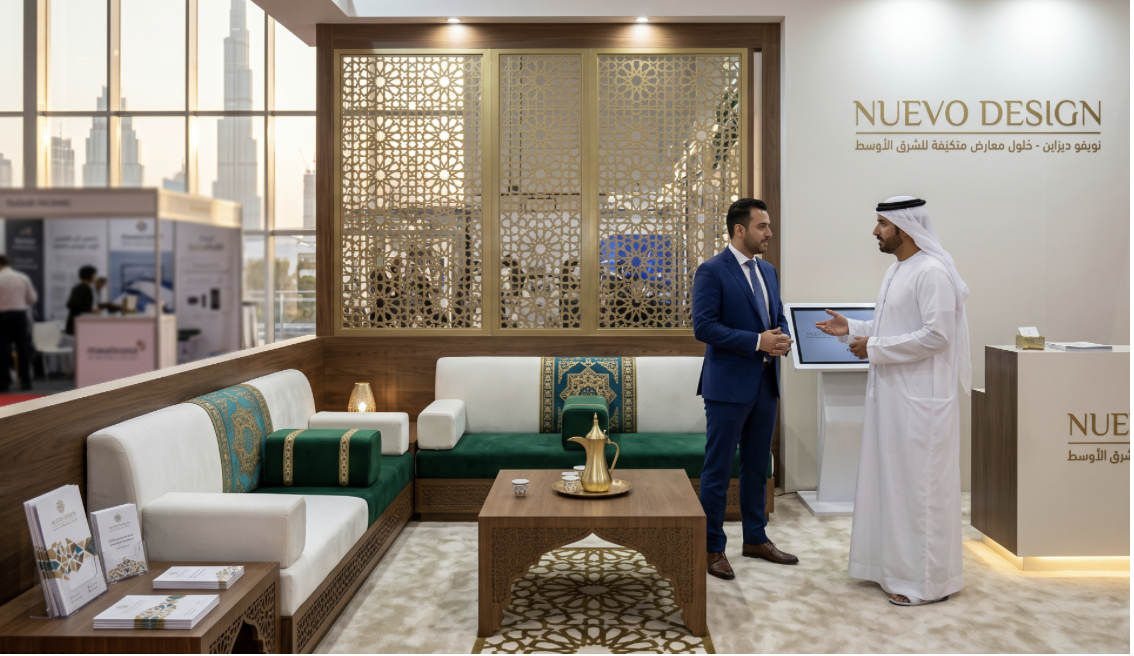
One of the most critical, distinct, and highly appreciated elements you can incorporate into your stand layout is the majlis. In Arabic culture, a majlis (a word that literally translates to “a place of sitting”) is a private or semi-private area specifically designed for hosting guests, discussing serious business, and building rapport in a relaxed setting.

The Psychology of the Majlis Exhibition Stand

Integrating a majlis exhibition stand does not mean you have to abandon your modern corporate identity to create something that looks like a traditional Bedouin tent. A contemporary majlis can seamlessly blend your brand’s colors and sleek materials with traditional Middle Eastern functionality.

  • Privacy and Discretion: Middle Eastern business executives often prefer to negotiate and discuss partnerships away from the prying eyes of their competitors and the noisy, bustling aisles of the exhibition hall. A majlis provides an enclosed, acoustically dampened, or visually screened-off area where high-level, confidential discussions can happen discreetly.
  • Ergonomics and Comfort: You must rethink standard trade show furniture. Ditch the standard Western high-top tables and uncomfortable bar stools. Opt for low, highly comfortable seating. Plush sofas, deep armchairs, and central, low coffee tables are absolutely essential. The physical comfort of your guests directly translates to their willingness to stay, converse, and engage with your sales team.
  • Strategic Spatial Placement: Ideally, the majlis should be located toward the back or the center of the stand, away from the main flow of heavy foot traffic. This ensures it feels like an exclusive, VIP zone, making your guests feel valued and respected.

“A well-designed majlis doesn’t just offer a place to sit down; it is a physical manifestation of your respect for local business etiquette. It silently communicates that you understand how business is done here.”

The Sacred Art of Hospitality: Food and Beverage Zoning

In the Middle East, hospitality is not an afterthought or a nice-to-have bonus; it is an integral, mandatory part of doing business. Your stand design must physically accommodate this tradition to avoid appearing rude or unwelcoming.

Traditional Offerings: Gahwa and Premium Dates

You need dedicated, highly functional spaces for serving traditional refreshments. Ensure your architectural layout includes a small preparation area, a hidden pantry, or a front-facing hospitality counter where dedicated staff can serve Arabic coffee (gahwa) and premium dates.

Offering these items as soon as a guest sits down in your majlis is a standard welcoming gesture that sets a positive tone for the meeting. If your booth feels purely transactional and lacks a dedicated hospitality element, it will likely be perceived as cold, arrogant, or completely out of touch with local customs. When considering your custom exhibition stand design services, ensuring there is plumbing, refrigeration, and storage for hospitality is a top priority.

Cultural Considerations Trade Shows Dubai: Modesty and Spatial Dynamics

When researching cultural considerations trade shows Dubai, modesty in both physical design and visual imagery is an absolute non-negotiable factor. While the UAE is highly tolerant and cosmopolitan, respecting the local Islamic culture is expected of all international exhibitors.

Modesty in Promotional Graphics and Video Content

You must conduct a strict audit of all promotional graphics, printed brochures, video loops, and staff uniforms. Ensure all models featured in your marketing materials are dressed modestly. This generally means covering shoulders and knees, and avoiding deep necklines or overly tight clothing. Overly revealing imagery is not only culturally insensitive but can lead to your materials being officially banned, covered up, or removed by the event organizers-causing massive disruption to your marketing campaign and severe damage to your brand’s reputation.

Zoning for Personal Space and Comfort

In some regions of the Middle East, strict gender separation is observed in public spaces. While Dubai exhibitions are mixed-gender, creating distinct, spacious zones within your stand can make all visitors-regardless of their background-feel much more comfortable. Ensure there is ample space in your primary walkways. You want to avoid tight bottlenecks where accidental physical contact between male and female attendees navigating your booth might occur, as this is a crucial aspect of respecting local personal space etiquette.

Visual Aesthetics: Typography, Language, and Localization

While English is widely recognized as the lingua franca of international business in Dubai, integrating Arabic into your stand design shows immense respect and significantly broadens your appeal to regional visitors from neighboring countries like Saudi Arabia, Oman, Qatar, and Kuwait.

  • Professional Translation is Mandatory: Ensure high-quality, professional Arabic translations for all key signage, primary taglines, and core brochures. Never rely on automated translation tools or generic AI for this. Arabic is a highly nuanced, complex language, and direct machine translations often result in embarrassing grammatical errors, reversed text, or completely altered meanings.
  • Right-to-Left (RTL) Design Logic: Remember that Arabic is read from right to left. This means the entire flow of your graphics, timelines, and visual storytelling on the booth walls may need to be mirrored to make logical sense to a native Arabic speaker.
  • Color Psychology: While maintaining your brand identity, be aware of regional color associations. Green is a highly revered color in the Islamic world. Gold and silver denote luxury and prosperity. Ensure your color palette does not accidentally conflict with local sensibilities.

Actionable Checklist for Your Next Middle East Exhibition

Before you finalize your booth design for GITEX, Arab Health, or ADIPEC, run through this critical checklist:

  1. Allocate Majlis Space: Have you dedicated at least 20-30% of your total booth space to a private, comfortable VIP seating area?
  2. Integrate Hospitality Zones: Does your floor plan include a functional pantry or coffee serving station for gahwa and dates?
  3. Audit Visuals for Modesty: Have local experts reviewed all graphics, videos, and staff uniforms for cultural appropriateness?
  4. Professional Localization: Have you hired a native B2B copywriter to translate key signage into Arabic, ensuring correct RTL formatting?
  5. Review Lighting: Is the lighting in your majlis warm and inviting, rather than harsh and clinical? (Learn more about our lighting design expertise).

Frequently Asked Questions (FAQ)

Q: Do I need to translate all my highly technical product brochures into Arabic? A: Not necessarily. While English is spoken fluently in technical and engineering circles in Dubai, having your main structural signage, high-level corporate overview, and executive business cards in high-quality Arabic shows immense respect. Keep in-depth technical data sheets in English if your target engineers prefer it, but always provide an Arabic summary.

Q: Is a majlis required for smaller, inline stands (e.g., 3×3 meters)? A: Even in a highly compact 3×3 or 3×6 meter space, you can create a “majlis feel.” Instead of a high standing counter, use two comfortable lounge chairs and a small low table. It’s about the posture, the comfort, and the intention to host, not just the square footage of the room.

Q: Can we serve alcohol at our corporate stand in Dubai? A: Absolutely not. Serving alcohol on the exhibition floor is strictly prohibited at almost all trade shows in the UAE. Stick to high-quality coffee, fresh juices, and premium bottled water. If you wish to host clients with alcohol, you must organize a private dinner at a licensed hotel or restaurant after the show hours.

Q: How should our staff dress for the exhibition? A: Business formal and modest. For men, suits and ties are standard. For women, business suits, long skirts, or trousers with blouses that cover the shoulders and have modest necklines are highly recommended.

Conclusion

Succeeding at UAE business culture events requires much more than simply showcasing an impressive product or erecting a standard pop-up banner. It demands the creation of an immersive environment that deeply respects and reflects local traditions.

By strategically integrating a comfortable majlis, prioritizing authentic and generous hospitality, ensuring strict modesty in your visuals, and paying meticulous attention to cultural details, you protect your brand from costly missteps. More importantly, you open the door to lucrative, long-term regional partnerships based on mutual respect and understanding.

Ready to design a culturally optimized exhibition stand for your next Middle East event? Discover our full range of exhibition management services or contact our local design experts today to discuss a layout that honors regional tradition while perfectly highlighting your brand’s innovation.


GITEX Global in Dubai is not simply a trade show; it is the undisputed epicenter of the global technology ecosystem. As the industry prepares for the 2026 edition, the stakes for international exhibitors have never been higher. Tech giants, disruptive startups, and forward-thinking government entities will converge at the Dubai World Trade Centre (DWTC) to showcase the absolute cutting edge of artificial intelligence, cybersecurity, cloud computing, and Web 3.0 technologies.

Standing out in a venue saturated with flashing LED screens, massive architectural structures, and aggressive marketing campaigns requires visionary planning. It demands a masterful approach to tech exhibition design Dubai that prioritizes both breathtaking visual aesthetics and seamless, frictionless functionality.

The Urgency of Securing a Specialized GITEX Stand Contractor

Many companies make the critical mistake of treating a technology exhibition like a standard B2B trade show. However, building a stand for GITEX involves highly specialized, deeply technical requirements. From managing massive electrical loads for server racks to navigating the complex overhead rigging rules of the DWTC, you cannot rely on a generic builder.

Partnering with an experienced GITEX stand contractor months in advance is the most crucial decision you will make.

“At a premier technology exhibition, your physical stand is the ultimate real-world demo of your product. If your architecture is clunky, disorganized, or outdated, the audience will subconsciously assume your software and solutions are too.”

A specialized partner understands the invisible challenges of the venue. They will engineer hidden cooling systems for your hardware, ensure massive fiber-optic cable runs are safely concealed beneath raised flooring, and secure the necessary municipality permits long before the build phase begins. To understand the level of structural engineering required for these mega-events, you can review the technical capabilities detailed in our custom exhibition stands documentation.

Core Architecture of an Elite IT Trade Show Booth

Designing an IT trade show booth requires a delicate, intentional balance. You must integrate high-tech audiovisual equipment without losing the human element that drives B2B sales. The design must facilitate both crowd-stopping attraction and intimate, high-level corporate negotiations.

Here are the critical architectural pillars for a successful tech booth:

1. Frictionless, High-Speed Demo Zones

Technology buyers do not want to read brochures; they want to touch the UI, test the load speeds, and push the software to its limits.

  • Ergonomic Pods: Create multiple, distinct demonstration pods that are easily accessible from the main aisle.
  • Anti-Glare Technology: Because tech halls are incredibly bright, utilize anti-glare screens and strategic overhangs to ensure your software is visible from any angle.
  • Integrated Connectivity: Every demo station must have fail-safe, hardwired internet connections and concealed charging ports for your sales team’s devices.

2. Acoustic Management and Zoning

GITEX is notoriously loud. Pitching complex enterprise software or closing a multi-million dollar cybersecurity contract is nearly impossible if you have to shout over your neighbor’s presentation. Advanced tech booths utilize intelligent acoustic zoning. This involves using sound-absorbing architectural fabrics, directional audio speakers that only project sound to a specific spot, and enclosed, soundproofed VIP meeting rooms (often styled as modern Majlis lounges) for critical negotiations.

3. Immersive, Screen-less Visuals

While LEDs are standard, the top brands are moving toward immersive, kinetic storytelling. Instead of flat screens, consider 3D holographic projection fans, transparent OLED displays that layer data over physical hardware, or kinetic ceilings that physically move and change color to represent data flow. These elements stop executives in their tracks.

The Future: Exhibition Stand Builder GITEX 2026 Trends

As a forward-thinking exhibition stand builder GITEX 2026, Nuevo Design is already implementing the trends that will dominate the exhibition floor in the coming years. To stay ahead of the curve, exhibitors must embrace the next evolution of spatial design.

Merging Physical Architecture with UI/UX

In 2026, the physical space must perfectly mirror the digital user experience (UX) of the product being sold. If your software is known for its clean, minimalist, and intuitive interface, your stand must reflect those exact attributes. The flow of foot traffic through the booth should mimic the onboarding funnel of your digital platform.

Sustainable Technology Integrations

The global tech industry is facing massive pressure to adhere to ESG (Environmental, Social, and Governance) standards. Top-tier exhibitors are moving away from single-use plastics and massive timber builds. Instead, they are utilizing reusable aluminum modular frames clad in custom, high-tension fabrics, and powering their stands with energy-efficient smart lighting grids.

AI-Powered Lead Capture Integration

The clipboard is dead. In 2026, tech stands will feature AI-driven visitor management systems. This includes facial recognition (where legally permitted) to identify returning VIP clients, smart cameras that read attendee badge data passively, and interactive AI avatars that can answer basic product questions in multiple languages, freeing up your senior engineers to handle complex inquiries.

To see how we seamlessly blend digital innovation with physical construction for global brands, browse our extensive project portfolio.

Dominate the Global Tech Scene

Preparing for a mega-event like GITEX requires ambition, precision, and an elite structural partner. You cannot afford technical glitches, blown budgets, or a stand that blends into the background of a thousand other tech companies.

Your technology is disruptive, innovative, and game-changing. Your exhibition presence should be exactly the same.

Secure Your GITEX 2026 Strategy Today

The best locations and the top contractors are already being booked for the next edition of GITEX. Do not wait until the last minute to plan your global showcase. Contact Nuevo Design today to schedule a comprehensive strategy session. Let our team of expert tech-exhibition designers draft a breathtaking, high-performance concept that will firmly establish your industry dominance in Dubai.