Neuromarketing at Exhibitions: How Booth Architecture Influences B2B Buyer Decisions
In the high-stakes world of B2B event marketing, standing out requires more than just a large logo and a friendly sales team. When a potential client walks through a crowded trade show floor in Dubai or Frankfurt, their brain is overwhelmed with stimuli. To capture their attention and drive conversions, brands must look beyond aesthetics and delve into the science of human behavior.
This is where neuromarketing at exhibitions comes into play. By understanding how the human brain processes spatial environments, brands can use booth architecture to subtly guide B2B buyer decisions. In this comprehensive guide, we will explore the psychological triggers embedded in exhibition design and how you can leverage them to maximize your event ROI.
The Science of Space: What is Neuromarketing in Exhibition Design?
Neuromarketing is the application of neuroscience to marketing. It involves analyzing how the brain responds to various marketing stimuli. In the context of exhibition stand design, it means engineering every square meter of your booth to evoke specific cognitive and emotional responses.
When a B2B buyer enters an exhibition hall, their brain immediately begins scanning for safety, relevance, and value. If your booth architecture feels cluttered or confusing, the brain perceives it as a cognitive threat, prompting the buyer to walk away. Conversely, a well-structured space triggers “cognitive ease,” making the buyer more receptive to your pitch.
Why B2B Buyers Decide with Their Subconscious
It is a common misconception that B2B purchases are strictly logical. While ROI and technical specifications matter, the initial decision to engage with a brand is deeply emotional and subconscious.
“Up to 90% of purchasing decisions are made subconsciously. In a busy exhibition environment, the architecture of your booth is your first and most powerful psychological pitch.”
Before a buyer even speaks to your representatives, your booth’s layout, lighting, and materials have already communicated your brand’s trustworthiness, authority, and innovation.
Key Architectural Elements That Trigger Purchasing Decisions
To build a booth that converts, you must strategically manage how visitors move, look, and feel within your space. Here are the core architectural elements that influence buyer psychology.
Spatial Flow and Navigational Psychology
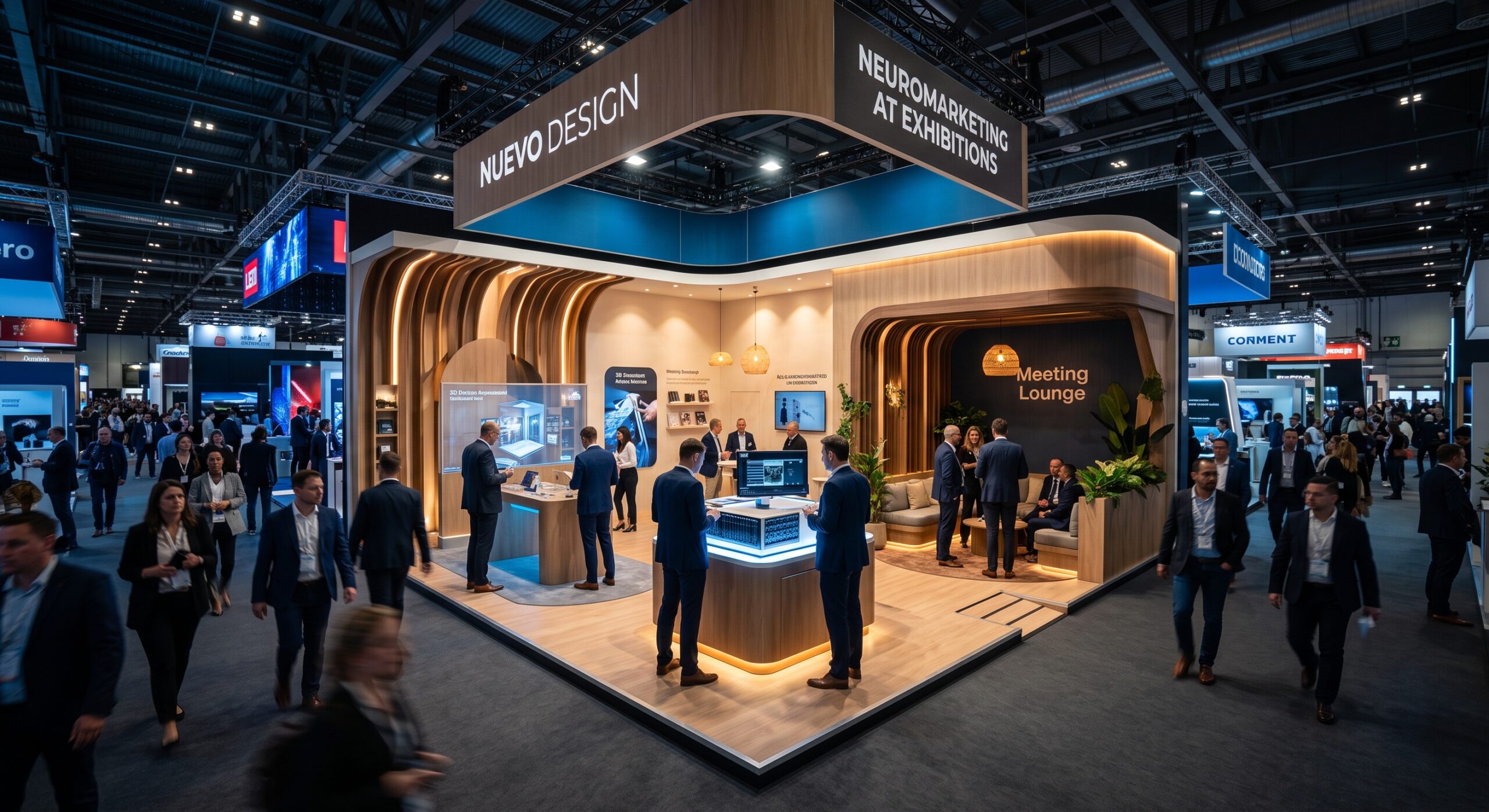
The layout of your booth dictates the customer journey. Open, inviting layouts reduce friction and encourage exploration. Navigational psychology suggests that people naturally gravitate toward spaces that offer a clear path and visible exit points.
When designing custom exhibition stands, avoid placing heavy physical barriers at the entrance. Instead, use curving lines and asymmetrical layouts to naturally draw the eye inward.
Creating Strategic Pause Points
A “pause point” is an architectural feature designed to make attendees stop and absorb information. In a fast-paced environment, breaking the buyer’s walking rhythm is essential.
- Focal Points: Use a central, well-lit product display to anchor the space.
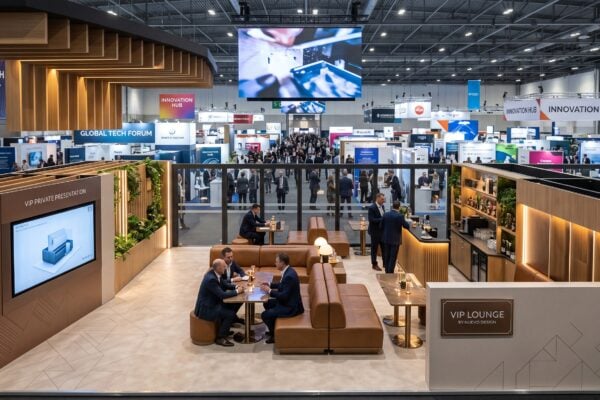
- Seating Areas: Comfortable, secluded seating lowers heart rates and shifts the brain from “scanning mode” to “listening mode.”
- Acoustic Zoning: Use sound-absorbing materials to create a quiet oasis amid the noisy trade show floor.
The Role of Phygital Installations
Modern B2B buyers expect interactivity. Integrating phygital installations (the seamless blending of physical and digital experiences) creates highly effective pause points. When a visitor engages with 3D mapping or augmented reality screens, their brain releases dopamine, a neurotransmitter associated with pleasure and memory retention. This positive chemical reaction is subconsciously linked back to your brand. Exploring interactive phygital solutions can significantly elevate the cognitive engagement of your space.
Lighting and Cognitive Load
Lighting is not just about visibility; it is a powerful tool for directing attention and managing cognitive load. Overly bright, uniform lighting can cause visual fatigue.
Using Warm vs. Cool Tones
- Cool, bright lights (blue/white): Ideal for product demonstration zones. They stimulate alertness and focus, signaling to the brain that critical evaluation is required.
- Warm, dim lights (yellow/orange): Best for meeting rooms and networking lounges. Warm lighting promotes relaxation, trust, and relationship-building—critical elements for closing complex B2B deals.
Sensory Engagement: Beyond Visual Booth Architecture
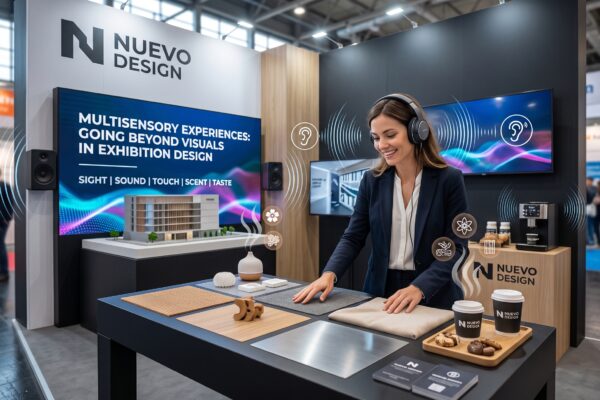
While architecture is highly visual, neuromarketing dictates that multi-sensory experiences create the strongest memories. Engaging touch, sound, and even smell can dramatically increase your booth’s impact.
Tactile Materials and Sustainable Booth Construction
The materials used in your booth architecture send immediate subconscious signals about your brand’s values. High-gloss plastics may scream “modern,” but they can also feel cold and mass-produced. On the other hand, natural materials like wood, matte metals, and living green walls communicate stability, warmth, and responsibility.
The Hidden Impact of Eco-Friendly Textures
Sustainability is a massive driver in modern B2B decisions. When buyers physically touch eco-friendly textures and see sustainable booth construction, it aligns with their internal corporate social responsibility (CSR) goals. This alignment creates a psychological phenomenon known as “shared values confirmation,” which rapidly builds trust.
Best Practices for Implementing Neuromarketing
To successfully apply these concepts at your next trade show, keep these practical tips in mind:
- Map the Journey: Draw a physical map of how you want visitors to move through the space. Ensure the highest-value interactions happen in the most comfortable zones.
- Limit Choices: The “paradox of choice” states that too many options overwhelm the brain. Display only your core products to prevent decision paralysis.
- Use Contrast: The human brain is hardwired to notice contrast. Use contrasting colors or lighting to highlight key areas of your booth.
- Prioritize Comfort: Thicker carpet padding reduces foot fatigue, making buyers want to stay in your booth longer simply because it feels physically better than the aisle.
Frequently Asked Questions (FAQ)
What is neuromarketing in the context of exhibitions? Neuromarketing at exhibitions involves designing booth spaces based on how the human brain subconsciously processes environmental stimuli, spatial flow, and sensory inputs to drive engagement and sales.
How does booth lighting affect B2B buyers? Lighting directs visual attention and influences mood. Cool lighting increases focus for product demos, while warm lighting fosters trust and relaxation in meeting areas.
Why are open booth layouts more effective? Open layouts reduce the brain’s perception of confinement or entrapment, lowering cognitive resistance and making visitors more willing to enter and explore the space.
Can sustainable materials really influence a B2B sale? Yes. Natural and eco-friendly materials trigger positive psychological associations with responsibility, longevity, and shared ethical values, which are highly attractive to modern B2B buyers.
Conclusion: Ready to Transform Your Next Exhibition?
Understanding neuromarketing at exhibitions changes the way you view event marketing. Your booth is not just a physical structure; it is a psychological tool designed to attract, comfort, and persuade B2B buyers. By optimizing spatial flow, lighting, interactive phygital elements, and tactile materials, you can create an environment that speaks directly to the subconscious minds of your target audience.
Do not leave your next major trade show to chance. Let architecture and science work together to maximize your ROI.
Are you ready to design a booth that scientifically drives B2B conversions? Contact our design team at Nuevo Design today, and let us build an immersive, neuromarketing-optimized experience for your next exhibition.