Spatial Localization: Cultural Differences in Booth Design
When expanding your business globally, participating in international trade shows is a critical step. However, a booth design that generates massive leads in Berlin might be completely ignored in Dubai. This is where the concept of spatial localization comes into play.
Understanding the cultural differences in booth design between regions like the Middle East and Europe is essential for capturing your target audience’s attention. In this comprehensive guide, we will explore how cultural norms dictate physical space, aesthetics, and business interactions, and how you can tailor your exhibition strategy for maximum impact.
What is Spatial Localization in Exhibition Space?
Spatial localization goes beyond simply translating your marketing brochures into a local language. It involves adapting the physical environment, layout, and sensory experience of your exhibition space to align with the cultural expectations of your target demographic.
Every culture has unspoken rules about personal space, privacy, hospitality, and visual aesthetics. By adapting your booth to respect these regional nuances, you build immediate trust with local attendees. For global brands, partnering with experts in custom exhibition stands is the most effective way to ensure your space resonates with the local market.
Key Cultural Differences in Booth Design: Middle East vs. Europe
To succeed internationally, exhibitors must understand the contrasting business cultures of the Middle East and Europe. Let’s break down the fundamental differences across three major categories.
1. The Approach to Space: Openness vs. Privacy
How people interact with physical space varies drastically between these two regions. The layout of your booth is the first thing attendees will notice.
European Transparency and Flow
In Europe, the business culture highly values transparency, efficiency, and accessibility.
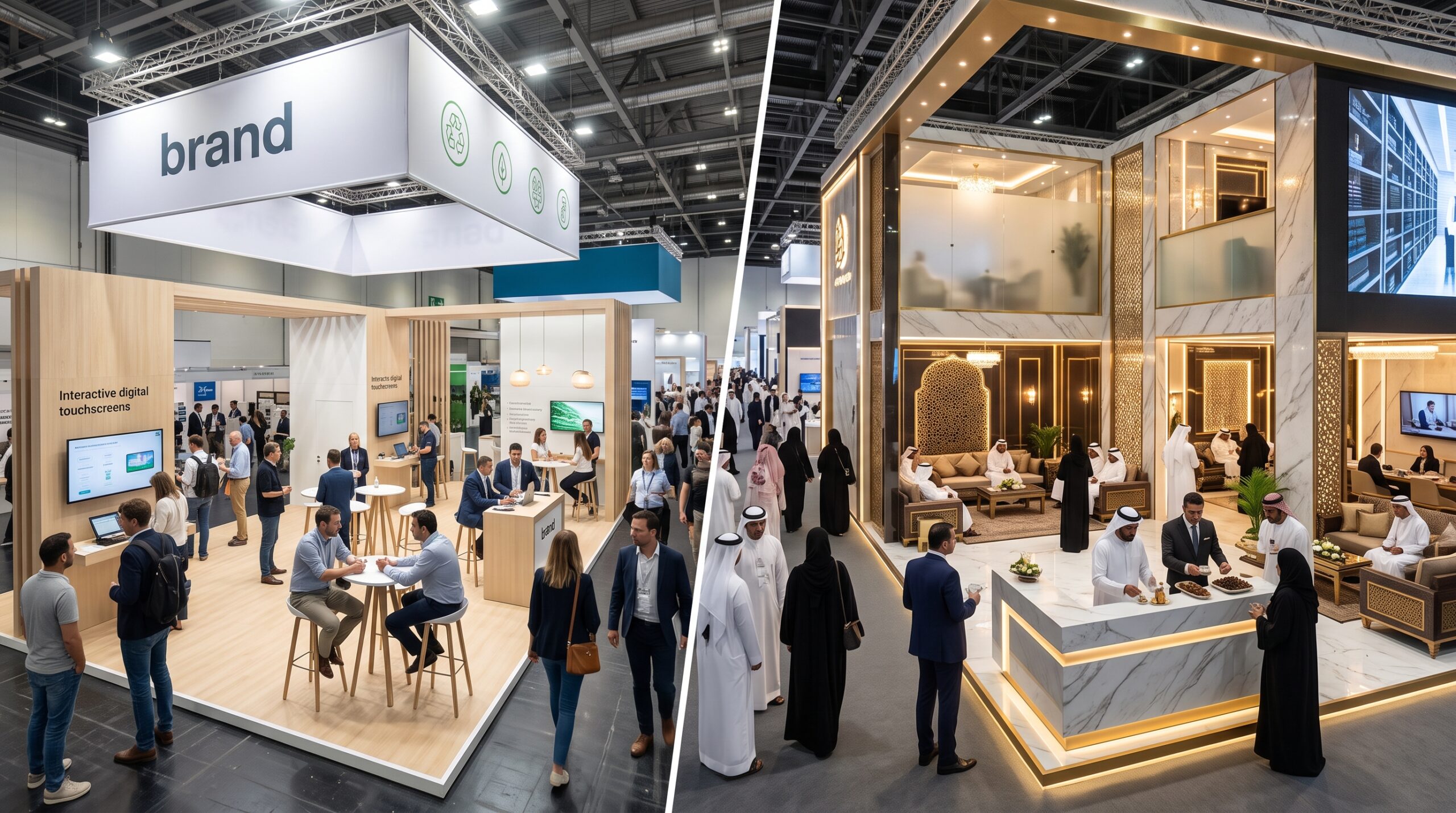
- Open-Plan Layouts: European booths typically feature open borders with multiple entry points. The goal is to remove physical barriers between the brand and the visitor.
- Egalitarian Spaces: There is rarely a strict hierarchy of space. Product displays are placed at the forefront, encouraging attendees to freely explore and interact with the staff.
Middle Eastern Exclusivity and Hierarchy
Conversely, the Middle Eastern business culture is deeply rooted in relationship-building, respect, and hierarchy.
- The “Majlis” Concept: A traditional Arabic seating area, known as a Majlis, is often required. This is a private, comfortable space where high-level discussions take place.
- Zoned Privacy: Booths in the Middle East often utilize semi-enclosed structures. While the reception desk is welcoming, the actual business negotiations happen behind closed doors or frosted glass screens to ensure VIP privacy.
2. Hospitality and the Business Ritual
The way business deals are negotiated dictates the functional requirements of your booth’s interior.
The Fast-Paced European Approach
European trade shows are often fast-paced. Visitors want quick facts, innovative demonstrations, and direct answers.
- High-top tables and bar stools are popular, encouraging brief, dynamic meetings.
- Self-service coffee stations or interactive digital kiosks are highly effective.
Middle Eastern Warmth and Tradition
In the Middle East, business is personal. You cannot rush a deal, and hospitality is a sign of immense respect.
- Dedicated Catering: Your booth must have a space for serving traditional Arabic coffee (Gahwa), dates, and high-quality refreshments.
- Lounge Seating: Comfortable, plush seating is mandatory. Meetings can last for hours, and the comfort of your guests directly reflects the prestige of your brand.
3. Aesthetics, Colors, and Materials
Visual appeal is subjective. What looks modern to one culture may look unfinished to another.
European Minimalism
- Design Ethos: “Less is more.”
- Materials: Eco-friendly, sustainable materials like exposed wood, recycled aluminum, and matte finishes are highly favored.
- Lighting: Bright, natural, and clinical lighting that highlights technological innovation.
Middle Eastern Opulence
- Design Ethos: “Bigger and bolder.”
- Materials: High-gloss finishes, marble textures, gold accents, and luxurious fabrics.
- Lighting: Dramatic, warm lighting with LED accents that emphasize prestige and high quality.
“Spatial localization isn’t about changing your brand identity; it’s about translating your brand’s core values into a visual language the local culture understands.”
Practical Instructions for Designing in the Middle East
If you are preparing for an exhibition in Dubai, Riyadh, or Abu Dhabi, follow these practical tips to optimize your space:
- Prioritize VIP Areas: Dedicate at least 30-40% of your booth space to closed or semi-private meeting rooms.
- Invest in High-End Finishes: Do not compromise on flooring or furniture. Use thick carpets, polished counters, and premium seating.
- Incorporate Cultural Nuances: Be mindful of local customs. Ensure there is ample space for modest movement and consider separate seating areas if required by the specific demographic.
- Hire Local Hosts: Employ bilingual staff who understand the etiquette of serving coffee and greeting dignitaries.
Practical Instructions for Designing in Europe
When exhibiting in Frankfurt, Barcelona, or Milan, your strategy should pivot toward efficiency and innovation:
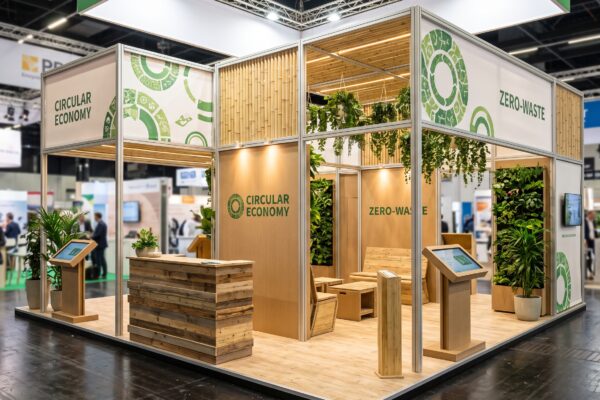
- Emphasize Sustainability: Clearly display your company’s commitment to the environment. Use reusable booth structures and minimize printed paper.
- Make it Interactive: Use VR, AR, or touchscreens. European audiences love to explore products hands-on before speaking to a sales rep.
- Keep it Open: Remove heavy walls. Use hanging signs and strategic lighting to define your space without closing it off.
- Focus on Metrics: Design the flow to capture data quickly, using badge scanners at strategic entry points.
Step-by-Step Strategy for International Exhibitors
To successfully implement spatial localization, you need a structured approach. Here is how you can prepare for your next international trade show.
Phase 1: Cultural Audit and Research
Before sketching a design, research the specific city and trade show. A tech expo in Berlin will have a different vibe than a luxury real estate show in Dubai. Analyze your competitors and identify the cultural expectations of your ideal client.
Phase 2: Partnering with Local Experts
Do not try to build an international booth from your home office. Partner with a global agency that offers comprehensive exhibition design services and understands local building codes, labor laws, and cultural expectations.
Phase 3: Modular Adaptation
Design a modular booth. A smart structural design allows you to use the same core branding elements while swapping out layout features-like adding a private lounge for the Middle East or an open tech-demo area for Europe.
Frequently Asked Questions (FAQ)
Q: Does spatial localization mean changing my company colors? A: Not necessarily. You should maintain your brand identity but adapt the application of your colors. For example, a blue brand color can be used in matte finishes in Europe and high-gloss acrylics in the Middle East.
Q: Are double-decker booths popular in both regions? A: Yes, but for different reasons. In Europe, they maximize limited floor space for product displays. In the Middle East, the upper level is almost exclusively reserved as an ultra-private VIP lounge for high-net-worth clients.
Q: How important is technology in Middle Eastern booths compared to Europe? A: Both regions value technology. However, in Europe, technology is often used for self-guided exploration. In the Middle East, technology should be used as a spectacular visual draw (like massive LED video walls) to attract visitors into the booth where human-to-human interaction takes over.
Conclusion: Bridging the Cultural Divide
Succeeding in the global marketplace requires more than a great product; it requires empathy, respect, and a deep understanding of human behavior. Spatial localization is the ultimate tool for showing your international clients that you respect their culture and understand their business needs.
By adapting your booth’s layout, aesthetics, and hospitality protocols to fit the specific region-whether embracing European minimalism or Middle Eastern opulence-you will dramatically increase your foot traffic, lead generation, and overall return on investment.
Ready to dominate your next global trade show?
Don’t leave your international success to chance. If you are looking to create an unforgettable, culturally optimized exhibition space, the experts are here to help.
Call to Action: Subscribe to our newsletter for more insider tips on global trade show strategies, or contact Nuevo Design today to start planning a customized, high-converting booth for your next international exhibition!