Cultural Nuances in Exhibition Stand Design for the Middle East Market: A Comprehensive Guide for Global Brands
Entering the Middle East market represents a monumental opportunity for international brands. Cities like Dubai, Abu Dhabi, and Riyadh have rapidly transformed into global hubs for commerce, innovation, and international trade. They host some of the most lucrative and heavily attended expos in the world, spanning industries from technology and real estate to healthcare and construction. However, finding sustainable success in this region requires much more than simply shipping your existing European or American marketing materials overseas. The Middle East is a region where deeply rooted traditions and modern business practices intersect in unique ways.
When planning your corporate presence at major regional expos, Middle East exhibition design demands a highly specialized, respectful, and culturally informed approach. The physical space you create on the trade show floor serves as the first handshake with your potential partners. Failing to adapt your booth can lead to severe reputational risks, alienated prospects, and wasted investments. Conversely, a culturally sensitive design instantly positions your agency or brand as a trustworthy, local expert who understands the market’s pulse. In this comprehensive guide, we will explore the critical nuances of designing an exhibition space for this unique and rewarding market.
Decoding UAE Business Culture Events
To design an effective exhibition stand, you must first understand the psychological and cultural environment in which it will operate. The business landscape in the United Arab Emirates and the broader Middle East is fundamentally built on relationships, mutual trust, and deep-seated respect.
Unlike the fast-paced, highly transactional nature of Western trade shows—where quick elevator pitches and immediate badge scanning are the norms—UAE business culture events prioritize face-to-face interaction and long-term personal connection. In Arab business culture, establishing a strong personal rapport is a mandatory prerequisite to discussing contracts or partnerships. You do business with people you know and trust.
Your exhibition stand must physically reflect this reality. It should not merely be a sterile showroom designed to display products; it must act as a welcoming, comfortable environment where genuine relationships can be nurtured over time. This fundamental shift in purpose dictates everything from your floor plan and spatial zoning to your lighting design and staff etiquette.
The Core of Middle East Exhibition Design: The Majlis
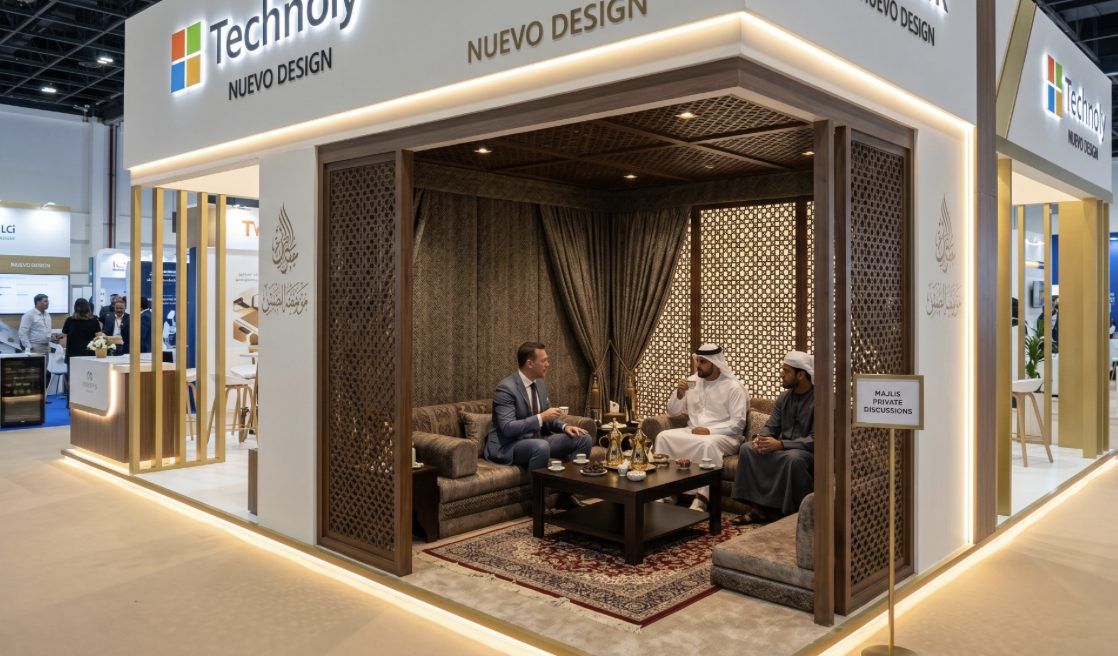
One of the most critical, distinct, and highly appreciated elements you can incorporate into your stand layout is the majlis. In Arabic culture, a majlis (a word that literally translates to “a place of sitting”) is a private or semi-private area specifically designed for hosting guests, discussing serious business, and building rapport in a relaxed setting.
The Psychology of the Majlis Exhibition Stand
Integrating a majlis exhibition stand does not mean you have to abandon your modern corporate identity to create something that looks like a traditional Bedouin tent. A contemporary majlis can seamlessly blend your brand’s colors and sleek materials with traditional Middle Eastern functionality.
- Privacy and Discretion: Middle Eastern business executives often prefer to negotiate and discuss partnerships away from the prying eyes of their competitors and the noisy, bustling aisles of the exhibition hall. A majlis provides an enclosed, acoustically dampened, or visually screened-off area where high-level, confidential discussions can happen discreetly.
- Ergonomics and Comfort: You must rethink standard trade show furniture. Ditch the standard Western high-top tables and uncomfortable bar stools. Opt for low, highly comfortable seating. Plush sofas, deep armchairs, and central, low coffee tables are absolutely essential. The physical comfort of your guests directly translates to their willingness to stay, converse, and engage with your sales team.
- Strategic Spatial Placement: Ideally, the majlis should be located toward the back or the center of the stand, away from the main flow of heavy foot traffic. This ensures it feels like an exclusive, VIP zone, making your guests feel valued and respected.
“A well-designed majlis doesn’t just offer a place to sit down; it is a physical manifestation of your respect for local business etiquette. It silently communicates that you understand how business is done here.”
The Sacred Art of Hospitality: Food and Beverage Zoning
In the Middle East, hospitality is not an afterthought or a nice-to-have bonus; it is an integral, mandatory part of doing business. Your stand design must physically accommodate this tradition to avoid appearing rude or unwelcoming.
Traditional Offerings: Gahwa and Premium Dates
You need dedicated, highly functional spaces for serving traditional refreshments. Ensure your architectural layout includes a small preparation area, a hidden pantry, or a front-facing hospitality counter where dedicated staff can serve Arabic coffee (gahwa) and premium dates.
Offering these items as soon as a guest sits down in your majlis is a standard welcoming gesture that sets a positive tone for the meeting. If your booth feels purely transactional and lacks a dedicated hospitality element, it will likely be perceived as cold, arrogant, or completely out of touch with local customs. When considering your custom exhibition stand design services, ensuring there is plumbing, refrigeration, and storage for hospitality is a top priority.
Cultural Considerations Trade Shows Dubai: Modesty and Spatial Dynamics
When researching cultural considerations trade shows Dubai, modesty in both physical design and visual imagery is an absolute non-negotiable factor. While the UAE is highly tolerant and cosmopolitan, respecting the local Islamic culture is expected of all international exhibitors.
Modesty in Promotional Graphics and Video Content
You must conduct a strict audit of all promotional graphics, printed brochures, video loops, and staff uniforms. Ensure all models featured in your marketing materials are dressed modestly. This generally means covering shoulders and knees, and avoiding deep necklines or overly tight clothing. Overly revealing imagery is not only culturally insensitive but can lead to your materials being officially banned, covered up, or removed by the event organizers-causing massive disruption to your marketing campaign and severe damage to your brand’s reputation.
Zoning for Personal Space and Comfort
In some regions of the Middle East, strict gender separation is observed in public spaces. While Dubai exhibitions are mixed-gender, creating distinct, spacious zones within your stand can make all visitors-regardless of their background-feel much more comfortable. Ensure there is ample space in your primary walkways. You want to avoid tight bottlenecks where accidental physical contact between male and female attendees navigating your booth might occur, as this is a crucial aspect of respecting local personal space etiquette.
Visual Aesthetics: Typography, Language, and Localization
While English is widely recognized as the lingua franca of international business in Dubai, integrating Arabic into your stand design shows immense respect and significantly broadens your appeal to regional visitors from neighboring countries like Saudi Arabia, Oman, Qatar, and Kuwait.
- Professional Translation is Mandatory: Ensure high-quality, professional Arabic translations for all key signage, primary taglines, and core brochures. Never rely on automated translation tools or generic AI for this. Arabic is a highly nuanced, complex language, and direct machine translations often result in embarrassing grammatical errors, reversed text, or completely altered meanings.
- Right-to-Left (RTL) Design Logic: Remember that Arabic is read from right to left. This means the entire flow of your graphics, timelines, and visual storytelling on the booth walls may need to be mirrored to make logical sense to a native Arabic speaker.
- Color Psychology: While maintaining your brand identity, be aware of regional color associations. Green is a highly revered color in the Islamic world. Gold and silver denote luxury and prosperity. Ensure your color palette does not accidentally conflict with local sensibilities.
Actionable Checklist for Your Next Middle East Exhibition
Before you finalize your booth design for GITEX, Arab Health, or ADIPEC, run through this critical checklist:
- Allocate Majlis Space: Have you dedicated at least 20-30% of your total booth space to a private, comfortable VIP seating area?
- Integrate Hospitality Zones: Does your floor plan include a functional pantry or coffee serving station for gahwa and dates?
- Audit Visuals for Modesty: Have local experts reviewed all graphics, videos, and staff uniforms for cultural appropriateness?
- Professional Localization: Have you hired a native B2B copywriter to translate key signage into Arabic, ensuring correct RTL formatting?
- Review Lighting: Is the lighting in your majlis warm and inviting, rather than harsh and clinical? (Learn more about our lighting design expertise).
Frequently Asked Questions (FAQ)
Q: Do I need to translate all my highly technical product brochures into Arabic? A: Not necessarily. While English is spoken fluently in technical and engineering circles in Dubai, having your main structural signage, high-level corporate overview, and executive business cards in high-quality Arabic shows immense respect. Keep in-depth technical data sheets in English if your target engineers prefer it, but always provide an Arabic summary.
Q: Is a majlis required for smaller, inline stands (e.g., 3×3 meters)? A: Even in a highly compact 3×3 or 3×6 meter space, you can create a “majlis feel.” Instead of a high standing counter, use two comfortable lounge chairs and a small low table. It’s about the posture, the comfort, and the intention to host, not just the square footage of the room.
Q: Can we serve alcohol at our corporate stand in Dubai? A: Absolutely not. Serving alcohol on the exhibition floor is strictly prohibited at almost all trade shows in the UAE. Stick to high-quality coffee, fresh juices, and premium bottled water. If you wish to host clients with alcohol, you must organize a private dinner at a licensed hotel or restaurant after the show hours.
Q: How should our staff dress for the exhibition? A: Business formal and modest. For men, suits and ties are standard. For women, business suits, long skirts, or trousers with blouses that cover the shoulders and have modest necklines are highly recommended.
Conclusion
Succeeding at UAE business culture events requires much more than simply showcasing an impressive product or erecting a standard pop-up banner. It demands the creation of an immersive environment that deeply respects and reflects local traditions.
By strategically integrating a comfortable majlis, prioritizing authentic and generous hospitality, ensuring strict modesty in your visuals, and paying meticulous attention to cultural details, you protect your brand from costly missteps. More importantly, you open the door to lucrative, long-term regional partnerships based on mutual respect and understanding.
Ready to design a culturally optimized exhibition stand for your next Middle East event? Discover our full range of exhibition management services or contact our local design experts today to discuss a layout that honors regional tradition while perfectly highlighting your brand’s innovation.